Gordon Prentice at Large - Politics in Newmarket




- Details
- Written by: Gordon Prentice
Doug Ford’s first policy initiative as Premier Designate was to trumpet the end of:
“Ontario’s Cap-and-Trade Carbon Tax”
A press release issued by his office on 15 June 2018 reminded us what Ford had said during the campaign:
"I made a promise to the people that we would take immediate action to scrap the cap-and-trade carbon tax and bring their gas prices down. Today, I want to confirm that as a first step to lowering taxes in Ontario, the carbon tax's days are numbered."
Ford is, of course, conflating cap-and-trade and the carbon tax although, by now, he should know the difference.
“Cap-and-trade” caps the total level of greenhouse gas emissions by industry or across the economy. Emission allowances can then be bought and sold by companies operating in a specified sector/s. This mechanism creates a market price for greenhouse gas emissions and encourages companies to develop non-carbon or low carbon alternatives to fossil fuels.
Dumb Petrolhead
A Carbon Tax is different. It puts a tax on greenhouse gas emissions or the carbon content of fossil fuels. The aim of both Cap-and-Trade and the Carbon Tax is the same - to drive down the use of carbon and, in so doing, save the planet.
All the available evidence suggests that Ford is a dumb petrolhead. And as a climate change denier he will be joining the swelling ranks of conservatives in Canada who are turning a blind eye to what is happening.
Climate change will impact catastrophically on people who are alive today.
Conservative Dishonesty
In today’s Globe and Mail Gary Mason talks about the Carbon Tax debate “being filled with dishonesty”. He makes the valid point that those who oppose carbon pricing “should at least reveal their climate plans”.
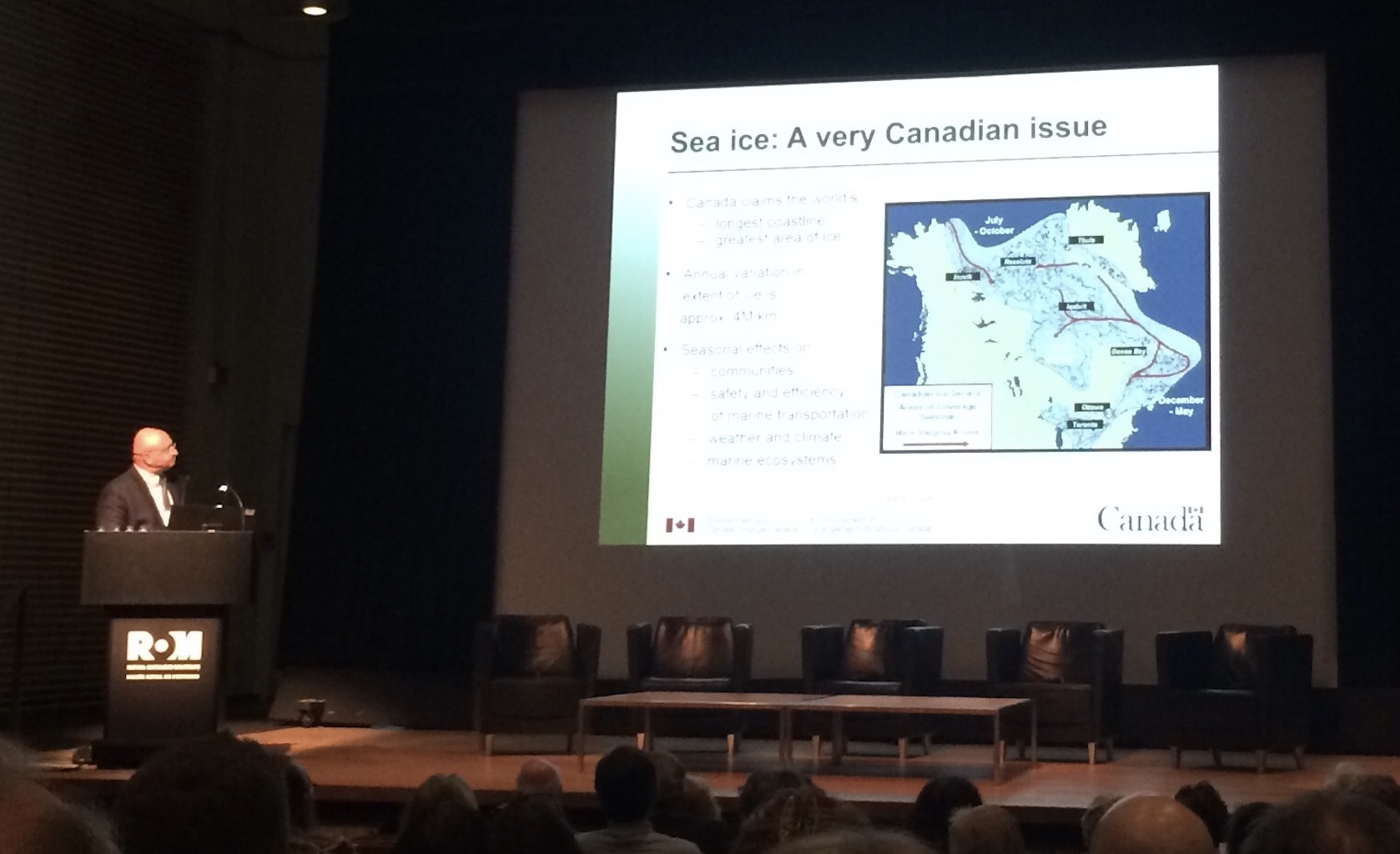
Mason reminds us the Antarctic is melting at an alarming rate. But what about the Arctic, here in our own back yard?
40% of Canada is in the Arctic.
On Monday I was at the ROM for a terrific one-day symposium on the Far North. Michael Byers, 51, a law professor at the University of British Columbia, tells us 50% of Arctic sea ice has disappeared in his lifetime. We are now seeing the loss of 13% of sea ice every decade.
Ice free
Sir John Franklin’s ships – HMS Erebus and HMS Terror – were trapped by sea ice in the North West Passage in the summer of 1846. Nowadays, cruise ships offer summer voyages into the very same North West Passage.
The Arctic is warming twice as fast as the planet as a whole.
Caribou herds are shrinking. Polar bears are starving. The whole fragile eco-system is on the brink of collapse.
And I am left wondering if Doug Ford has a view on this.
Probably not.
- Details
- Written by: Gordon Prentice
Steven Del Duca, the former Transportation Minister in the last Liberal Government, has thrown his hat into the ring for Chair of York Regional Council.
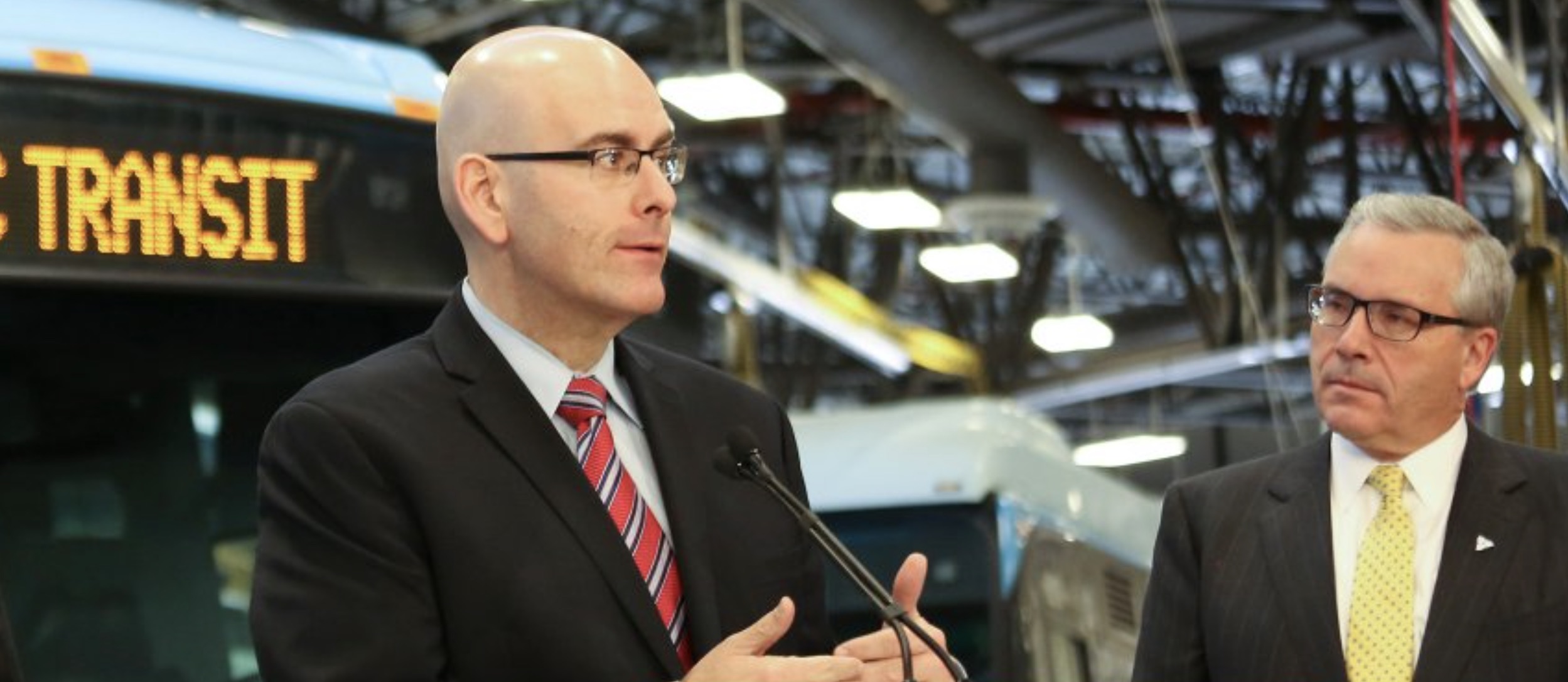
Last year the current Chair, Wayne Emmerson, received a pay and benefits package of $273,000.
The Regional Chair will be directly elected by voters at large for the first time this coming October. At the moment, the Chair is indirectly elected by members of the Regional Council.
Key part of Ballard’s legacy
The move forcing a change to direct election was pushed forward by former Newmarket-Aurora MPP, Chris Ballard, as a backbencher in the previous Government. When he became a Minister his Private Members’ Bill 42 would have died on the Order Paper had the proposal not been taken up by the Wynne Government and put into law.
The Forces of Darkness: Van Trappist and Dawe
The forces of darkness in the current Regional Council wanted to stick with the status quo.
Newmarket’s crusty old barnacle of a Mayor, Tony Van Trappist, set his face against direct election. So too did Aurora’s Mayor Geoffrey Dawe who failed to show up at the Committee Stage hearing of Ballard’s Bill 42 in March 2016.
Newmarket’s Darryl Wolk gave evidence to the Bill Committee on 24 February 2016 in the same session as Mario Racco, the former MPP, who is also running for Chair. I gave evidence on 2 March 2016, as did Newmarket’s Chris Campbell and Christina Bisanz. At Queen's Park there was no opposition to the proposal.
Sprinkling Stardust
The entry into the race of the high profile Del Duca will put the York Region election on the map for many people - especially in and around his home turf in Vaughan where many voters live.
York Region is a big spender and an influential player in Ontario politics yet most people haven’t got a clue what it does.
That is about to change.
- Details
- Written by: Gordon Prentice
Yesterday, I find myself in the Globe and Mail building in Toronto for an 8.30am chin-wag with political correspondent, Adam Radwanski. There are about 30 of us in the room on the 16thfloor with Radwanski perched on a bar stool ready to give us his thoughts on the election and to take questions. 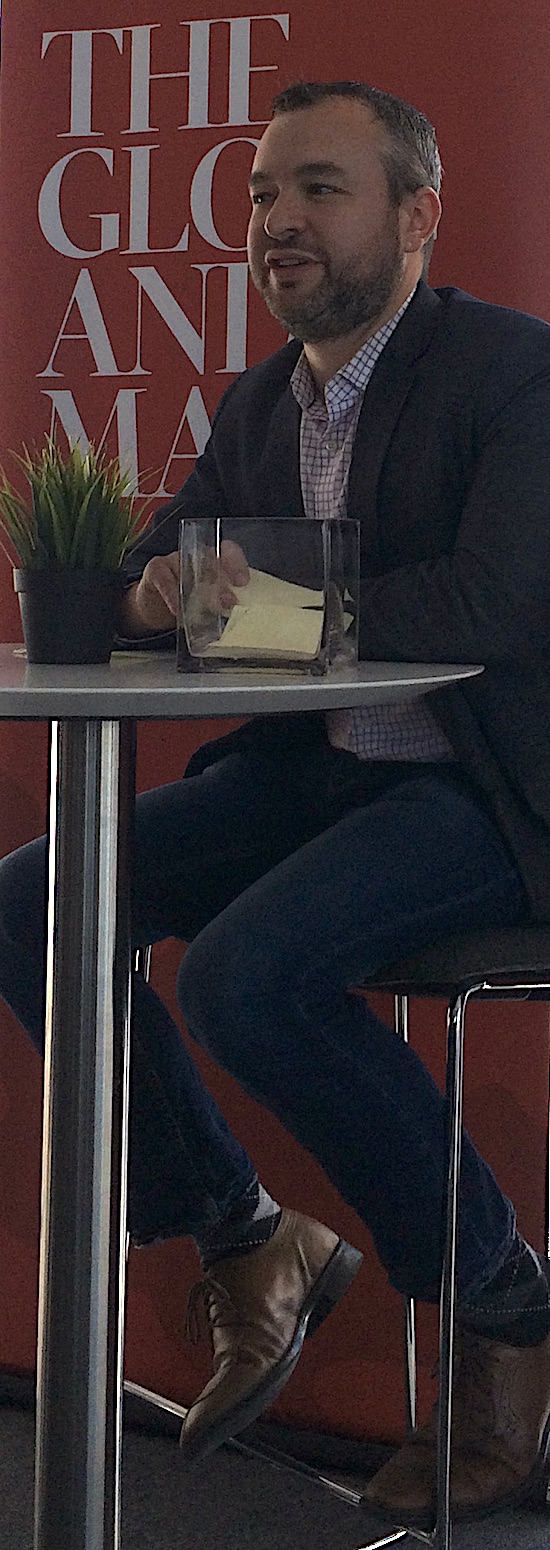
I am sitting next to a guy who describes himself as a Chartered Accountant. He sees me wince slightly and he smiles. Insolvency, he says. He wants to know if the Liberals, like Lazarus, can ever come back from the dead.
In our minds we all have a thousand questions. Why did the Liberals lose? Was it preordained? Did the PCs expect to win by this crushing margin? What is Ford going to do next? What are his priorities? There is no end to them.
We dodged a bullet
Radwanski says we all collectively dodged a bullet when Patrick Brown stepped down. He says there was deal-making and low ethical standards. I go further. There was corruption in the PCs, pure and simple.
He says the Liberals ran a decent campaign on “Care not Cuts” but, to my mind, the voters were underwhelmed. It didn’t set the heather on fire.
When the NDP surged in the polls Ford pivoted away from the Liberals and went straight onto the attack. There was, says Radwanski, an hysteria about it all. Ford was identifying NDP candidates by name who, if elected, would eat babies alive. (I made that bit up.)
Now Radwanski is talking about how Ford was helped by organisations (or entities) such as Ontario Proud. The NDP’s “sanctuary province” issue didn’t really surface in the mainstream campaign but Ontario Proud was hitting targets under the radar and causing a stir. (Conrad Black’s column in the National Post a week before the election touched on this issue.)
Ford kept on a tight rein
Ford was kept on a tight rein throughout the campaign by his minders, minimising his exposure to the media. And when he had to interact with reporters it was on his terms. There would be one or two questions and he’d be off. We didn’t get to know a lot more about him during the campaign – as is usually the case with politicians going for the top job.
There was no costed platform which, says Radwanski, would have given us some idea of the Party’s priorities. So we really don’t know what he is going to focus on.
With the benefit of hindsight, what could the Liberals/NDP have done to change the trajectory of the election campaign?
Ford means chaos
Radwanski says the Libs/NDP should have focussed on “chaos”. That Ford would be a “giant headache” for four years. If this had been central to their campaign narrative the headline that exploded onto the front pages just days before the election (Renata Ford suing Doug Ford for millions) would have been more than a one-day wonder. It would have resonated with the voters.
Radwanski says people were willing to overlook Ford’s failings and shortcomings – and the ethical issues.
Perhaps people’s expectations of politicians are so low they are no longer shocked by stories of ballot stuffing. Maybe they think all Parties do it. That they are all as a bad as the next.
I tell Radwanski I am one of those people still capable by being shocked that PC candidates could, in effect, buy a nomination. Is this going to be the new norm? Should we just get used to it? Or is something going to be done about this rot? And, if so, by whom?
Cleaning out the Stables
Radwanski tells me – improbably to my mind - that Ford will tackle the issue. He says people like Caroline Mulroney – who in late February described the PC party as being “in crisis” – will clean out the stables.
Personally I can’t see it.
The caravan will move on. I suspect it already has.
Now I am listening to a series of thoughtful questions, including one on the nature of democracy.
Radwanski says people voted for Ford’s PCs for a million different reasons. But some issues clearly had greater saliency.
There was anger about hydro rates which dampened and dissipated when the Liberals cut hydro bills. But when the issue surfaced in the election campaign that anger flared up again.
What’s Ford going to do about hydro?
There’s just not enough money to do all the things he promised to do. I hear Ford’s advisers are likely to open the books and tell Ford to be horrified at what he sees.
The cupboard is bare.
Even I could see that one coming.