Gordon Prentice at Large - Politics in Newmarket




- Details
- Written by: Gordon Prentice
Tomorrow (Wednesday 15 May) I plan to wander down to the Newmarket Public Library on Park Avenue and sit in on the 5.30pm Board meeting. The meetings aren’t streamed or video recorded so if you wanna know, you gotta go.
One item on the agenda catches my attention. The Library Chief Executive, Todd Kyle, is giving an update on how and when the library’s pressing need for more space is going to be addressed.
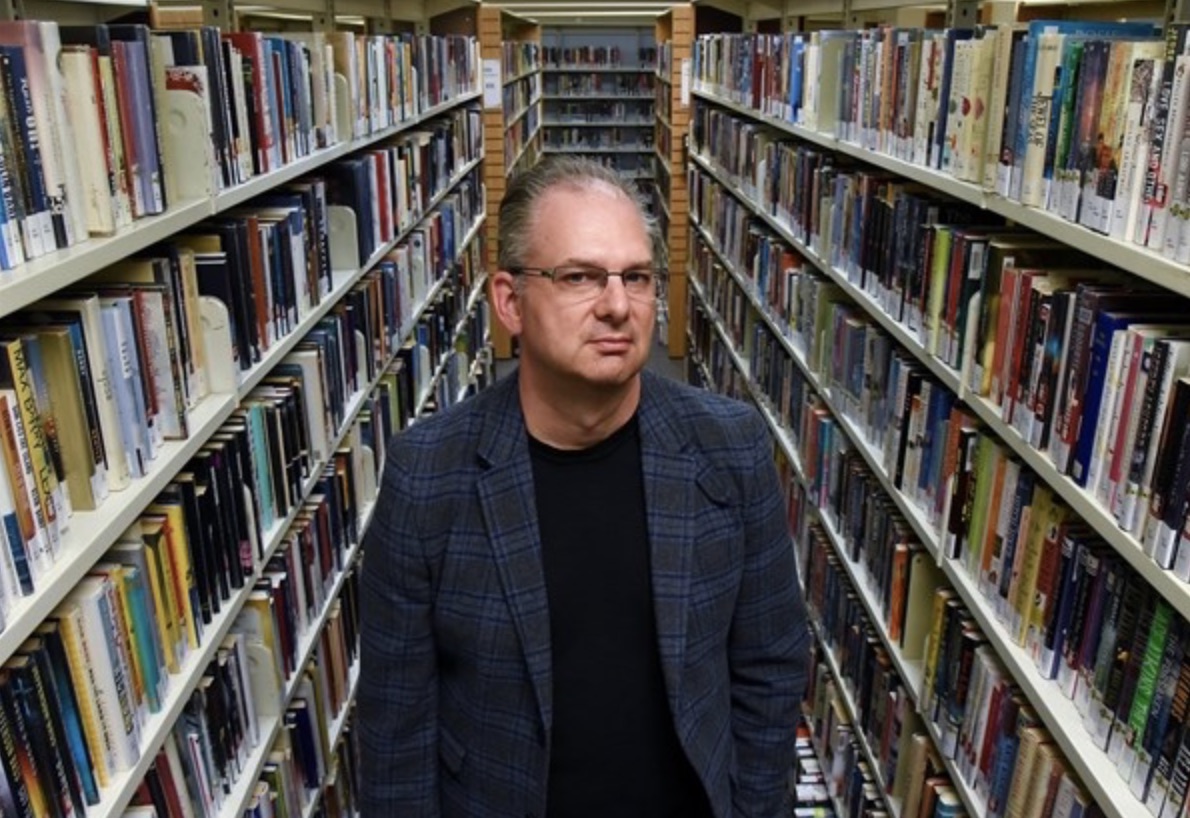
Over a year ago Todd told us the library in Park Ave was crowded with not enough space to meet customer demand. In his blog Todd said the proposed options for expanding library space in Newmarket are (a) to create a new, larger central library to replace the existing one or (b) to keep the current location and also build a new branch to serve another area of town.
In his latest report to the Library Board Todd gives the recent chronology:
“In September 2016, the Library Board voted to use existing funds to commission a study on future facilities needs and options pending Town of Newmarket support… In May 2017 Council was asked to endorse such a study but deferred that until after a pending efficiencies review of library operations was completed. In February 2018 Council approved implementation of the efficiencies study but moved to defer consideration of a facilities study to the 2018-2022 Council Strategic Priority setting exercise.”
Strategic Priorites
The Town has now completed the “strategic priorities” exercise but, once again, there is no mention of a new library. The can has been kicked down the road for the nth time. Todd regularly complains about the library not being a priority. But where was he when councillors were musing about their priorities for the next four years? He was noticeable by his absence. Was Todd invited to make a pitch for a new library or expanded facilities? And if not why not? Did he insist on making the case in a face-to-face presentation to councillors?
During the municipal election last October Regional Councillor Tom Vegh famously promised voters a combined Library and Seniors’ Centre on the Hollingsworth site but since then he has done nothing to advance his proposal. Tom had sat on the Library Board for years. He told me about his Hollingsworth proposal on 25 February 2019:
"This is something that I am working diligently on. When I have something concrete to announce I will let you know."
Since then Tom has lost his voice.
During the strategic priorities exercise Timid Tom was silent when the Mayor gave him every opportunity to make the case for his new library. Jane Twinney and Kelly Broome - who have sat on the Library Board for years - clearly thought the library wasn’t worth pushing as a priority and bit their tongues.
Taylor has other things on his plate
The Mayor, John Taylor, doesn’t see the library as a priority and is concentrating on Mulock Farm as his big legacy project. And it seems unlikely that the Town will consider any expansion of library facilities without having a study first. Which brings us full circle. Clearly, the sooner a Library Facilities Study is commissioned and completed the better.
In his Update to the Board Todd says:
“Discussions with senior Town staff on how best to approach a study are ongoing. It is thought that a collaborative approach would be best, leveraging possibilities for a facility shared with other community uses and and aligning with the Town’s goal (and another Strategic Priority) to create vibrant urban corridors along Yonge, Davis and Mulock.”
Todd continues:
“… Given that the need for expanded library space has already been established, it might be best to focus the study on a somewhat narrower search for and comparison of existing and potential sites.”
Seems to me we are all going round in ever decreasing circles.
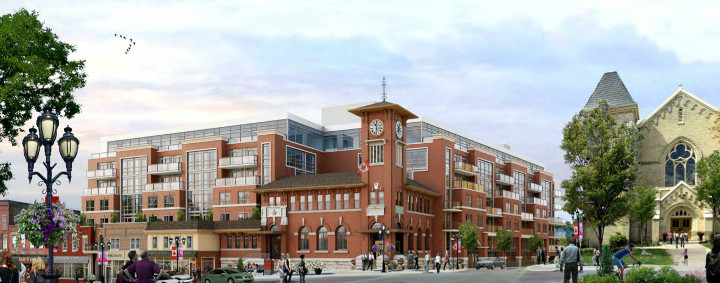
Hollingsworth Arena development
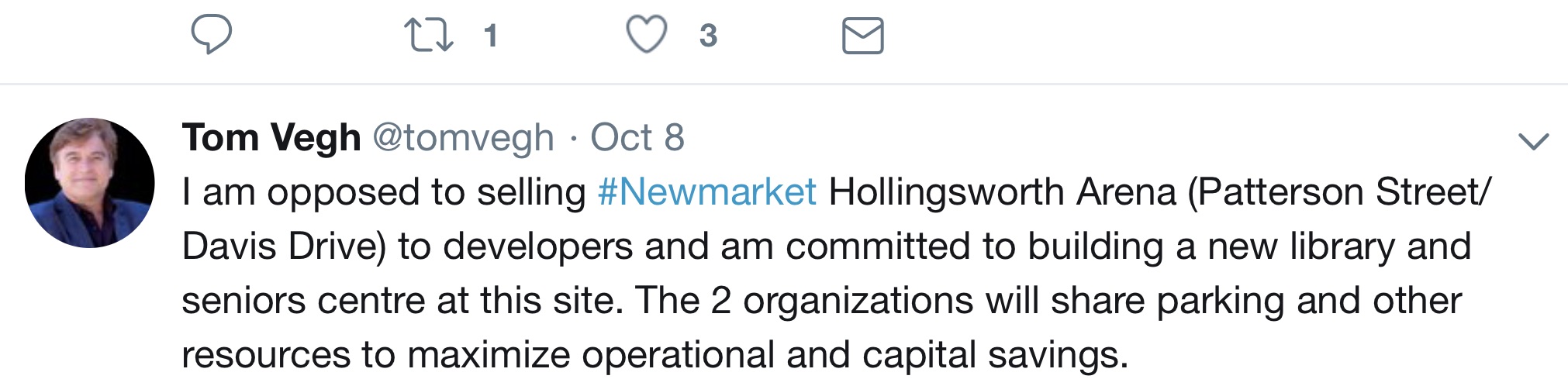
As it happens, next Tuesday (21 May) the Town will be considering a report from Planning staff on the future of Hollingsworth Arena. The idea that Timid Tom will pull out a plan for a new library and seniors’ centre at this late stage is for the birds. A complete fantasy.
But what about the possibility of a new Branch library?
Councillors are being invited to endorse Hollingsworth “scenario 2” which includes a six-storey seniors’ residence with a 8,589 sq ft “community facility” on part of the ground floor.
This is about one quarter of the size of the NPL in Park Avenue (35,000 square feet including administration and technical offices) but surely a case can be made for this space to house a Branch library? It meets Todd’s location criteria and ticks a lot of the boxes - but there may be other issues to work through such as parking.
Increased workload?
Todd’s update to Library Board members recommends moving ahead with a study asap. Mysteriously, he says
“Renewal of current contract resources at the Library would facilitate the increased workload that would occur if a study were to be undertaken.”
What on earth does this mean?
The Board would commission a study by outside consultants having already earmarked $50,000 of library funds for this purpose.
It is not going to be done by in-house staff so where is the increased workload?
What am I missing?
Blast from the past: Doug Ford would close a library branch in a heartbeat.
- Details
- Written by: Gordon Prentice
York Regional Council will decide its formal response to the Ford Government’s Regional Review next Thursday (16 May 2019).
If last week’s debate at the Region’s Committee of the Whole is any guide Ford will be told everything is just fine in York Region. There is no need to rock the boat.
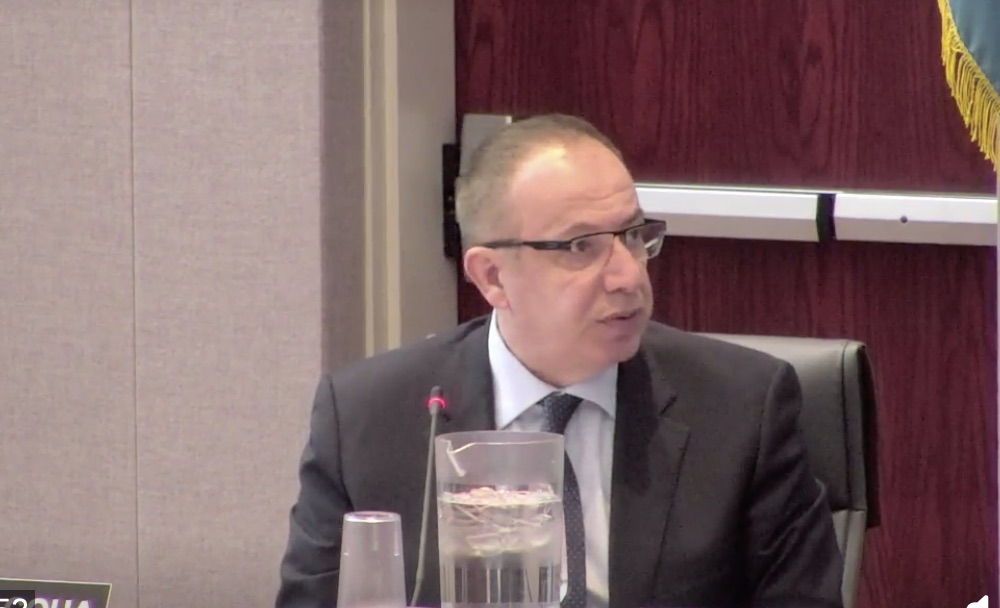
Vaughan’s Mayor, Maurizio Bevilacqua, says they should stick with the status quo. He says the Premier spends a lot of time in York Region and is
“fully aware of how effective we are”
He says that if Newmarket Mayor John Taylor wants to make recommendations they can be worded in a way that hits home:
“but I think they have to be consistent with strengthening our position on the status quo”.
The loquatious Jack Heath from Markham tells us our municipalities are doing a very good job.
“It was a disgrace what happened last summer in the City of Toronto and I certainly don’t expect to see anything like that here or in any of our nine municipalities.”
Mayor Steve Pellegrini from King gushes:
“we are proud of our municipalities and we are proud of York Region and we work well”
The Big Love-in
Richmond Hill’s Mayor, David Barrow, joins the love-in. We’ve gotta
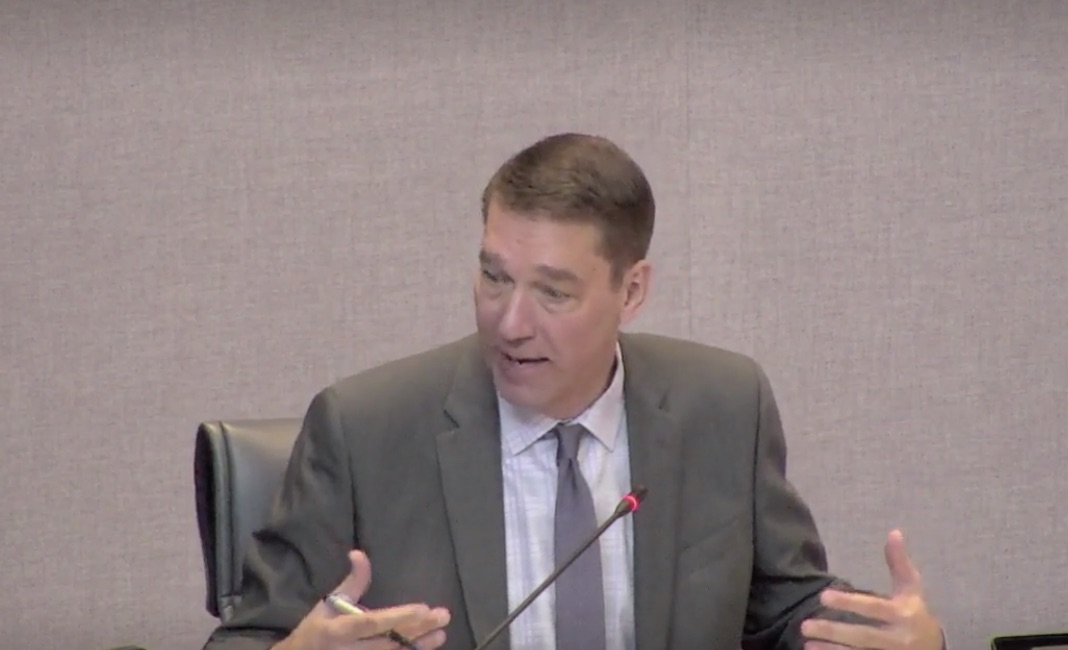
“just make sure that everyone understands we are a strong, strong region and these nine municipalities work wonderfully together.”
Joe Li from Markham hits a discordant note. He is always complaining about being ignored by York Region’s senior staff. He tells Bruce McGregor:
“We don’t want to see someone come out swinging critically against what the CAO is putting forward… So if you can try to accommodate all of our views that would be much appreciated.”
Shambles
It seems to me the whole exercise of putting together a coherent response to Ford’s regional review has been a complete shambles.
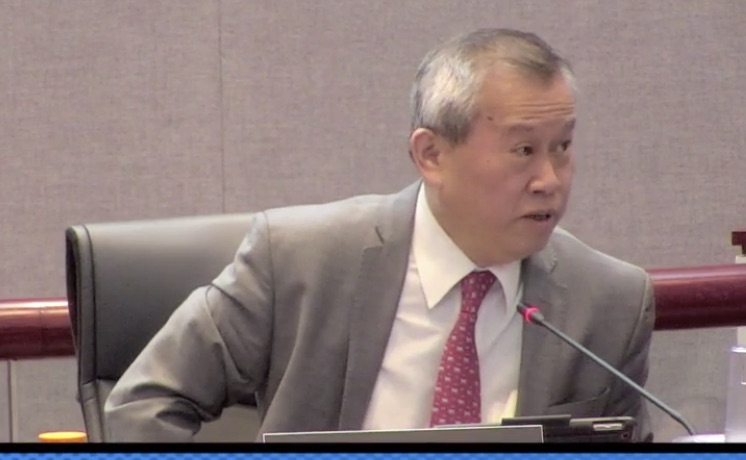
Newmarket’s John Taylor thinks the regional review taskforce (comprising the nine Mayors) should have made “more definitive” recommendations. What they got from Chief Administrative Officer Bruce McGregor didn’t quite cut it.
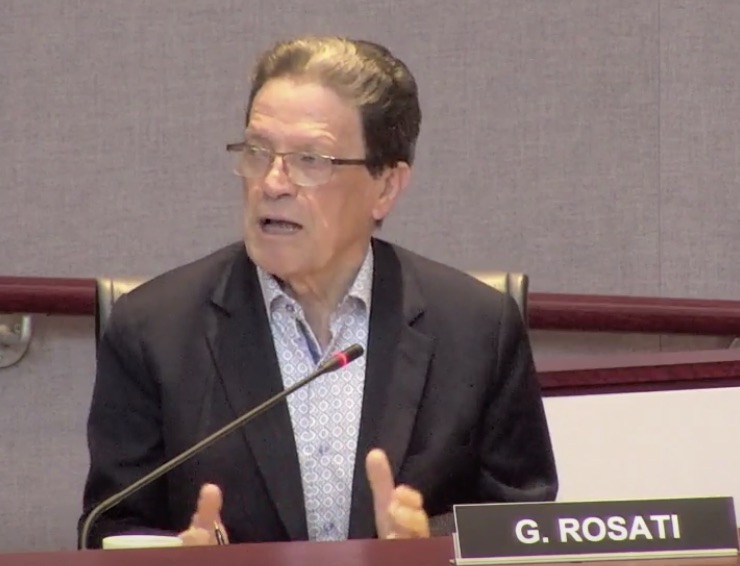
Vaughan regional councillor, Gino Rosati, underlines the dilemma facing elected members when he says quixotically:
“we want to keep the status quo (but) we don’t want to be saying no to everything that changes.”
The Province clearly did not give municipalities enough time to take soundings and to consult the people and organisations that might be affected by a wholesale reorganisation of municipal government. That’s a statement of the obvious.
The Regional Chair, Wayne Emmerson, candidly admits the Region doesn’t know which way the lower tier municipalities will jump.
“We don’t know how you all feel on regional government.”
Why not ask?
Just answer the questions
It seems to me the Region and the lower tier municipalities should, at the very least, have had a stab at answering all the questions posed by the regional advisers.
But no. The Regional Council couldn’t even bring itself to consider whether a directly elected chair would, at some point in the future, be a good thing. That would mean courting unpleasantness and possibly offending Emmerson.
So, in the search for a consensus, they end up patting each other on the back, congratulating themselves and saying how marvellous they all are. Vaughan’s Mayor Maurizio Bevilacqua sees the regional review as a great opportunity to highlight what “our cities and towns are doing and what the Region is doing”.
Existential Threat
As if Doug Ford is remotely interested in anything other than delivering cheaper municipal government. Mayor Bevilacqua seems not to realise that he and his colleagues are facing an existential threat.
Emmerson tells his colleagues:
“The unfortunate problem is we really don’t know what the Province is going to do.”
So why not call for a second round of consultations once the special advisers have submitted their recommendations to the Minister but before the Bill is introduced?
And why not ask for all the submissions to the Regional Review to be published?
Chaos
Wouldn’t that throw a spanner into the works?
Probably.
But why not? What have they got to lose?
Ford may not know much about good government.
But he understands chaos.
Minutes of the Committee of the Whole on 9 May 2019 contain the Regional Governance reports. See F.1.2 Governance Task Force - Formal Response to Province on Regional Government Review Report and Agenda Items F.2.8. and F.2.9
Members of the public and organizations have until May 21, to submit their views. 500 words of less, please!
Recommendations from the advisory body will focus on the following questions:
Questions on municipal governance and decision-making;
- Is the decision-making (mechanisms and priorities) of upper- and lower-tier municipalities efficiently aligned?
- Does the existing model support the capacity of the municipalities to make decisions efficiently?
- Are two-tier structures appropriate for all of these municipalities?
- Does the distribution of councillors represent the residents well?
- Do the ways that regional councillors/heads of council get elected/appointed to serve on regional council help to align lower- and upper-tier priorities?
Questions on municipal service delivery;
- Is there opportunity for more efficient allocation of various service responsibilities?
- Is there duplication of activities?
- Are there opportunities for cost savings?
- Are there barriers to making effective and responsive infrastructure and service delivery decisions?
Update on 16 May 2019: This draft response from the Region's Chief Administrative Officer, Bruce McGregor, was carried today by the Regional Council, amended with a reference to the Region's population growth.
- Details
- Written by: Gordon Prentice
It is Wednesday 8 May 2019 and I take myself down to Brampton for the big debate on whether Mississauga should leave Peel Region. In Ford’s Regional Review this is one of the hottest of the hot potatoes and I want to see how Michael Fenn and Ken Seiling - the two “independent advisers” - deal with the issues. 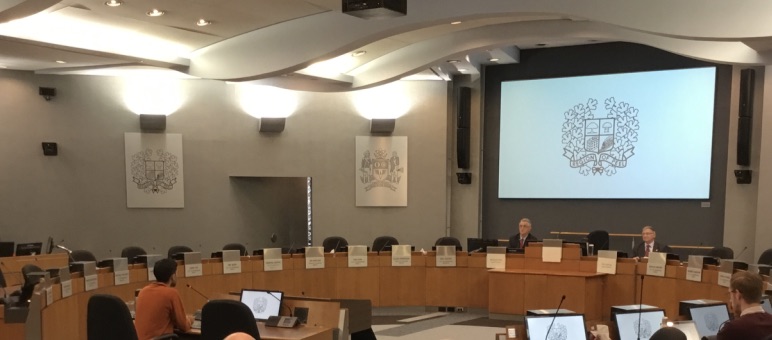
The questions Fenn and Seiling put to those presenting, both for and against, give us an insight into the advisers’ thinking. They are struggling with the agenda Ford gave them, just like the rest of us.
I arrive at 10am just as the show is getting on the road.
First up is Rehal Mehta who is a star turn. (Photo right. At the microphone) Young, bright and articulate. A man who doesn’t take prisoners. He is against the secession of Mississauga from Peel Region and slams the absence of information. He is asking questions but cannot get the answers. People have not been given the costs and benefits of all the options. What would a breakaway stand-alone City of Mississauga mean for the rest of Peel Region? What about the other permutations? The implications have not been examined. There has only been one Town Hall in Mississauga on secession.
Process flawed
He condemns the process as flawed. The meeting is during the day, excluding working people. Where are the young people? What about the demographics of this? Where are the people of colour? I look around and the overwhelming majority of those in the Regional Chamber are white.
Next up is Ian Sinclair from Caledon who wants the status quo. But if push comes to shove Caledon should join Dufferin.
Now we are hearing from David Wojcik, the President of the Mississauga Board of Trade. Predictably he complains of too much red tape. He wants efficient, effective and streamlined municipal government, a single tier Mississauga. It upsets him that the City “subsidises” Brampton and Caledon to the tune of $85M annually.
Ken Seiling perceptively asks if he is saying that no municipality should pay out more than it gets back. Wojcik side steps and says it is more about the weight that should be given to population size. The complaint is that Caledon has a bigger say than its population would warrant. Seiling wonders who would get the $40M from Pearson airport (I learn it doesn’t all go into Federal coffers).
Now we are hearing from a Bay Street finance person (and unsuccessful council candidate) Joe Horneck who argues the case for an independent Mississauga. It would save money.
“Our hearts are in alignment with our calculators.”
He claims there is a $342 per house subsidy from Mississauga to the Region of Peel. The problem, he says, is the very lop-sided composition of the Region with Mississauga - the 3rdbiggest city in Ontario and the 6thbiggest in Canada – having to dance to the tune of little old Caledon.
Getting the right answers
He worries loftily about public input and getting the “right answers” from people. He fears
“a majority of the population could be led into an unwise decision.”
He means, presumably, they might be content with the status quo. Separation, he says, is a reasonable avenue to take. But he wants to share services such as police, waste and wastewater.
Seiling observes that it is not just about what each component municipality pays in but what they get out of it. For example, some may pay 31% of the total cost but get 37% of the services. Seiling wants to know if the creation of special purpose bodies to handle shared services may erode accountability.
Fenn asks what would happen to Caledon if Mississauga and Brampton went their own ways. Horneck concedes it “would have to find a home”.
Now we have a stream of people who complain about the review’s modalities. The Province has not given enough information or time to examine all the issues.
Fenn is thinking aloud. Surely we should be thinking about what we are going to be facing in the next decade or two.
“What a regional perspective should look like given the challenges we are facing?”
Now the Lakeview Ratepayer Association of Mississauga gives a long list of questions its members have been asking – without getting answers. How would independence work? Is Mississauga in a position to go it alone? They too complain about the short time to do the review and the absence of information. They look forward to the independent report commissioned by the Region of Peel from Ernst & Young. But it will be delivered after 21 May – the advisers’ deadline for submissions.
Sharing facilities
Next up is a polymath who appears to know a lot about a lot of things. He wants improved delivery with lower costs. The answer, he says, is shared facilities straddling municipal boundaries. Seiling, who used to serve on a hydro board, again asks about political accountability if services are shunted into special service boards. 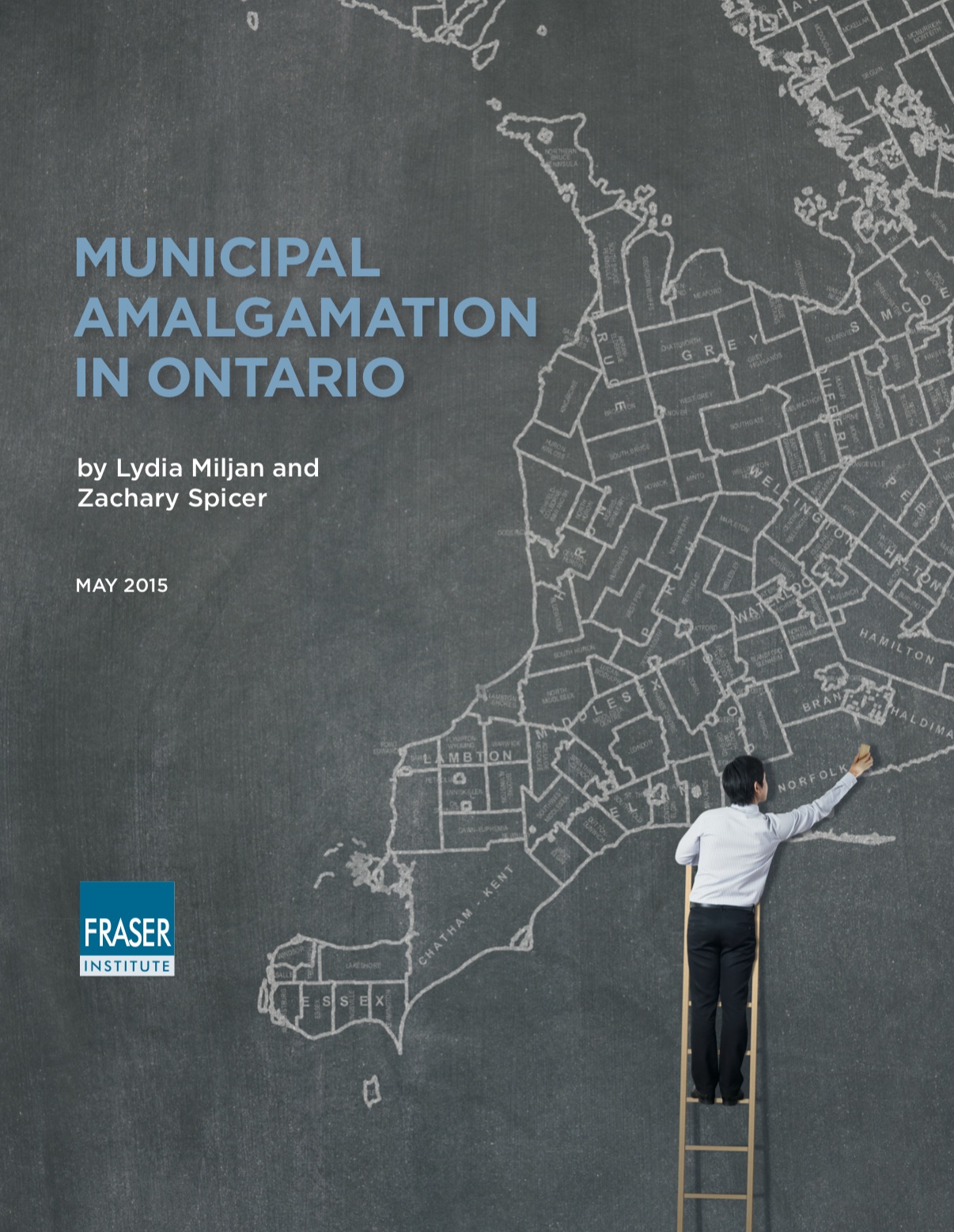
“Once these boards are created they take on a life of their own.”
Now we hear a terrific fiery contribution from physician, Dr Kulvinder Gill who practises in Brampton. She indignantly dismisses the process which allows Bonnie Crombie to claim to speak for Mississauga where there has been no referendum and no electoral mandate for secession. She says it is appalling that Bonnie Crombie had a “pre-set” position on secession. There are no details of how the unilateral plan to secede from Peel would impact on residents. She calls for an independent costed analysis of all the options.
Now we are on to more residents’ associations who echo the Crombie line. Andrew Gassmann, a financial analyst by trade and a council candidate in last year’s election in Mississauga. He tells us he was the runner-up as if this may give more weight to his views. Vital issues concerning Mississauga should not be decided by Brampton and Caledon members. He believes Mississauga should not be “subsidising” other municipalities. Seiling skewers Gassmann by asking him to give examples of things Mississauga wants to do but is prevented from doing by the Brampton and Caledon contingents. Gassmann struggles to come up with concrete examples.
Now Fenn is telling us that a lot of people who have been in touch concentrate on representation issues. He says it may be more productive to look at service delivery improvements and cost reductions. Perhaps. But the consultation’s format with arguments to be delivered in bite sized 3-5 minute pieces militates against this.
Dorothy Tomiuk from the Port Credit District Residents Association throws the timer out of the window. She has plainly thought long and hard about the Regional Review and is gonna take as long as she wants to get her points across. She concludes that Mississauga should not have affirmed support for separation.
A costly divorce
Sue Shanley from Mississauga’s Clarkeson Village residents hits out at the review’s methodology and the lack of information, making it impossible to take a thoughtful, educated decision. She tells us you cannot change something unless you know what is and what is not working. She fears the consequences of a divorce:
“how will the assets and liabilities be divided up?”
She says most people seem to be satisfied with the status quo. She cites the 2015 Fraser Institute report on Municipal Amalgamation in Ontario as evidence that these amalgamations can promise more than they deliver.
She describes the review process as
“very short and very chaotic.”
Now a presentation from CUPE 966 on the work members do for those who are amongst the most vulnerable in society. He does not want either to be casualties of the regional review.
Fenn wants to know how the delivery of services could or should change in the years ahead with new challenges, changing demographics and new technology. CUPE is silent on that.
6,000 submissions
And that’s it. I don’t know what the special advisers will take away from the three and a half hour session. Peel is the area where the debate on municipal reconfiguration is supposedly raging with greatest intensity.
Those presenting were, by definition, self-selecting with their own world view. Few claimed to be talking for anyone but themselves.
But they all – to a greater or lesser extent – acknowledged that more information was needed to make sense of the regional review and where it was headed.
As we close Michael Fenn announces they’ve had 6,000 submissions so far. Should we be impressed?
Until we see those submissions and evaluate them, I don’t think so.