Gordon Prentice at Large - Politics in Newmarket



- Details
- Written by: Gordon Prentice
Newmarket’s draft Secondary Plan – the blueprint that will guide the Town’s future growth – seriously underestimates the number of people who could be living here in 2031 and beyond.
The draft Plan, which is expected to be considered by Councillors in January next year, will amend the Town’s 2006 Official Plan, substituting a target population of 107,500 by 2031 for the previous forecast of 98,000 by 2026.
Today, there are around 86,000 people living here. The draft Plan assumes that 21,000 people will be living in the Urban Centre (broadly speaking, the Yonge/Davis corridors) by 2031, up from 1,700 in 2006 (the latest figure available).
So, we are asked to believe that the Town’s population – outside the Urban Centres – will grow by a mere 500 over the next 18 years.
Is this even remotely realistic?
Outside the Urban Centre, developments in so-called “emerging residential areas” are springing up like mushrooms. Mosaik Homes wants to build 200 homes at McGregor Farm at Davis Drive West and Bathurst. That’s another 700 residents.
On the opposite side of Davis Drive West, and west of Upper Canada Mall, lies the 23 hectare Toth Farm which was bought for development by Sundial Homes in April this year. 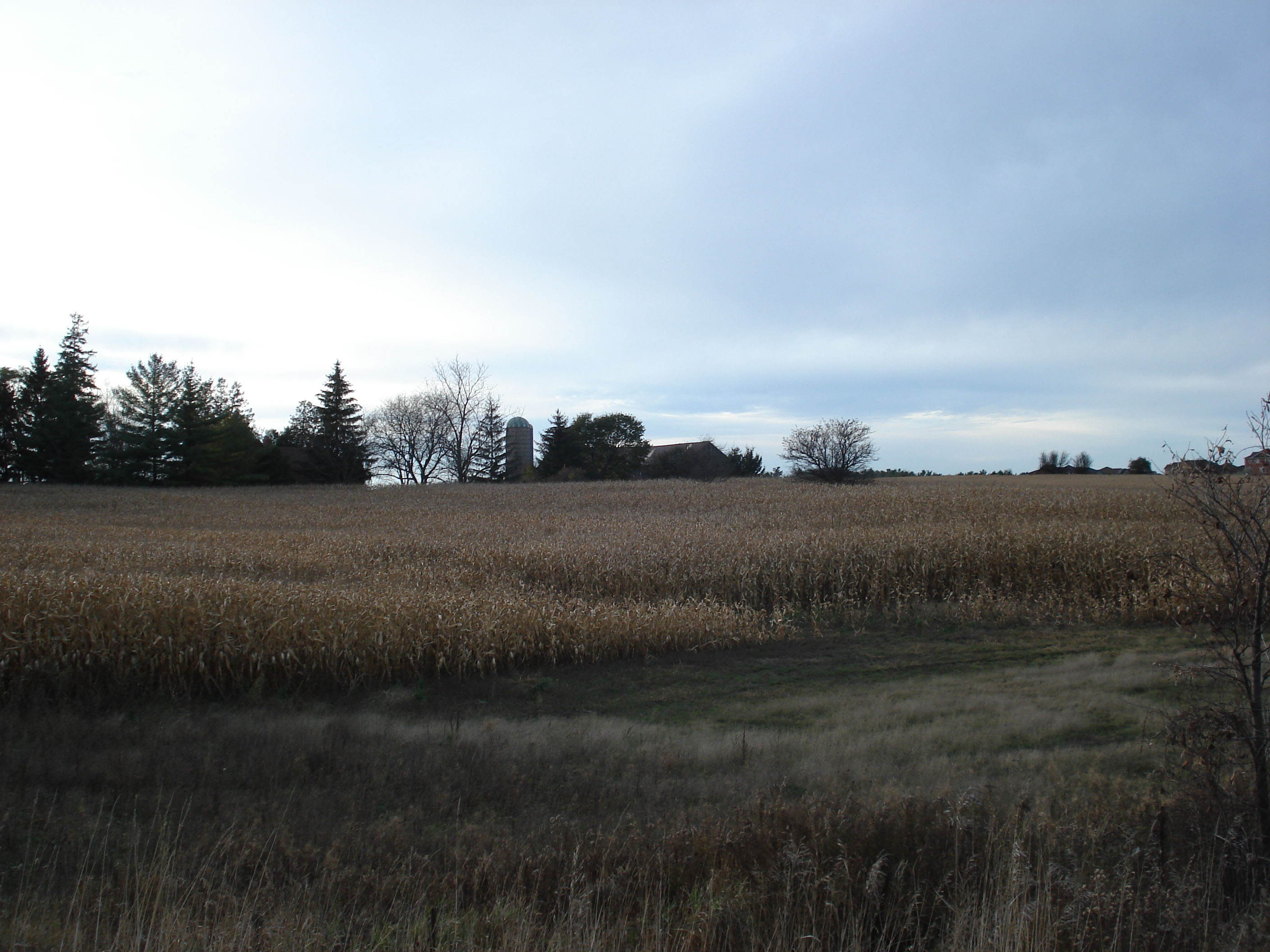
The developers want to build 157 detached and semi-detached houses; 285 on-street and 286 back-to-back Town homes. In total, 728 new dwellings accommodating an estimated 2,160 people.
And if Glenway goes ahead – 730 dwellings, and a couple of thousand people, shoe-horned into a “stable residential” area, the Town’s population projections will be worthless. (If nothing else, the draft Secondary Plan makes it abundantly clear that the development of Glenway is not needed to hit the mandated growth targets.)
At build out – where there is no more land left to develop - we are told that Newmarket will boast a population of 120,000 with 32,000 living in the Urban Centre.
The Town could, of course, undershoot if developers sit on their land and choose not to develop. 22 George Street serves as a warning of what can happen. Planning approval was given for a condo 20 years ago and we are still waiting to see the bricks and mortar. To stop this happening planning approvals must time expire after, say, three years.
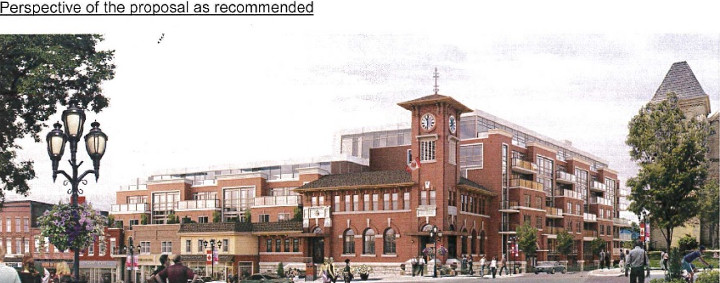
More likely, developers will rush to build high rise towers that, with bonusing, could reach 30 storeys at Davis and Yonge; 25 at Yonge and Mulock and 18 storeys in a ribbon of developments elsewhere along a large part of the Yonge Davis corridors.
As always, there are the imponderables. As sure as night follows day we shall get new “policy directions” from the Province or Region or Metrolinx.
The Town planners assume the Davis Drive Rapidway will complete in 2014 (spot on, I’d say) and Yonge from Davis Drive to Mulock in 2017. But they warn the extension of the Rapidway on Yonge north to Green Lane and south of Mulock depends on funding commitments.
The planners say their “projected rate of intensification” is dependent on the rate at which new developments can be hooked up to the water mains and sewer pipes. It is
“based on a general assumption that servicing allocation continues at the average rate up to and approximately 1,500 people per year Town-wide.”
That amounts to additional capacity for 27,000 people from now through to 2031. But if the capacity constraints are eased – or even lifted altogether – the brakes holding back development are well and truly off.
The draft Secondary Plan closes (page 95) with a section on the importance of monitoring
In partnership with York Region, the Town shall monitor and report on the level of development in the Urban Centres every five years as part of the Town’s regular review of its Official Plan, including an evaluation of: population and employment generated by both existing and proposed development; pace of development against projections and servicing capacities; traffic volumes on key streets and intersections; metrics on modal split and movement patterns and how these may shift as infrastructure is implemented.
That is sound advice.
But before councillors rubber stamp the draft Secondary Plan they would do well to test to destruction the assumptions made by those who wrote it.
And they should ask themselves the question:
Is this what we want for Newmarket?
- Details
- Written by: Gordon Prentice
Construction work on the VivaNext rapidway has shifted 5, 000 vehicles a day from Davis Drive on to roads in the Town’s residential neighbourhoods.
A report to the Town’s Committee of the Whole on Monday 4 November says this represents 18% of the 28,000 daily pre-construction volume on Davis Drive.
A Town-wide traffic mitigation study, due to take place next year, could be pushed back to 2015 or even 2016 if councillors accept a staff recommendation declaring it premature.
Arguing for delay, the staff say they can learn lessons from the successes and failures of traffic mitigation on Davis Drive (due for completion in 2014) which can then be used on the next VivaNext project. This second rapidway will run along Yonge Street from Mulock to Davis Drive and is due for completion in 2017.
The report lists local roads that are already under pressure from so-called traffic infiltration, saying they should be the focus of speed management programmes.
Fair enough, speed is an issue but so are traffic volumes.
In an astonishing oversight, no Town-wide traffic survey was carried out prior to construction work starting on Davis Drive. Staff say “the baseline level of existing infiltration is unknown” making it impossible for comparisons of traffic volumes in residential areas to be made, before and after.
The VivaNext projects have been on the cards for years and commonsense tells us traffic was likely to be displaced from congested corridors onto quiet residential streets.
Newmarket’s Traffic Management Policy sets a threshold of 20% for traffic infiltration onto suburban roads. Anything less than this is considered “normal” traffic.
There are lots of residents out there who believe a 20% increase in traffic on their local roads is anything but normal.
The Town has identified the streets “that are most likely to have long-distance and short-distance traffic infiltration”.
On the north side of Davis Drive these are: London Road; Main Street North; George Street; Penn Avenue; Bayview Parkway; Lundy’s Lane.
And on the south side of Davis Drive: Queen Street; Lorne Avenue; Millard (part); Srigley Street; Gorham Street; Eagle Street.
I suspect the Town has traffic counts for these roads that were taken before construction started on the Davis Drive rapidway.
If so, updated traffic counts for these very same streets should be taken and published at regular intervals from now until the Town-wide survey is put in hand.
There are plenty of other residential streets now used as rat runs where earlier traffic counts could also be updated and published.
People don’t need to be told traffic is getting heavier in their residential neighbourhoods but is within the “normal” range.
They want the facts and figures.
And they want measures put in place to keep local roads for local traffic.
The report on Traffic Infiltration in the Committee of the Whole agenda for 4 November 2013 can be found here. Scroll to agenda item 12.
- Details
- Written by: Gordon Prentice
The Draft Secondary Plan – which will guide development in Newmarket over future decades – looks set to be endorsed by councillors at the turn of the year.
At Monday night’s Statutory Public Meeting (28 October), there were no direct challenges by councillors to the underlying premise – that the Town has to accommodate 21, 000 residents in the Urban Centre (essentially the Yonge Davis corridors) by 2031 and 32, 000 at full “build out”.
Developments in the Urban Centre will have to meet height and density rules but the Plan allows these to be set aside by the Town if developers offer some kind of “public benefit”. Canny developers will do this as a matter of course and factor the costs into their calculations.
With this so-called "bonusing" the 20 storey “maximum” could rise to 30.
15 storeys could go to 25.
10 could end up at 18 and 6 storeys to 8.
I suspect these will become the new de facto maximums.
But who can predict with any degree of confidence what Newmarket is going to look like in the years ahead with this kind of elasticity built into the system?
Unfortunately, it will take a miracle for the Plan to be amended in a material way.
We will be told that too much time, effort and money has already been expended on the Draft Secondary Plan to start unwinding it all.
Councillors probably have no idea how much discretion they have in amending the draft, as presented to them.
Underscoring that very point, the top planner in charge of the file, Marion Plaunt, opens the meeting by reminding everyone that the Secondary Plan has got to be “in conformity” with the Growth Plan for the Greater Golden Horseshoe; Provincial Policy Statements; York Regional Plan and so on and so forth. I can’t immediately recall if the non statutory Metrolinx Plan was mentioned – but it is there in the Draft Plan.
Councillors and the rest of us need to know what is the minimum number of people Newmarket must absorb to be in conformity with this cascade of policy statements.
As yet, we do not have an answer.
It seems to me that in the absence of a compelling alternative vision, articulated by one or more of our councillors, the best we can hope for are some changes at the margins.
Dave Kerwin is concerned there could be 8 storey buildings on Queen Street.
Jane Twinney is unhappy that out-of-scale developments could go up next to single family homes.
Chris Emanuel wants adequate transitioning where big new developments abut residential areas.
These are not easy issues to resolve.
Indeed, we learn from Marion Plaunt, that the boundaries of the new Urban Centre have, in cases, been expanded to create lots big enough to attract developers. Modest family homes sit on adjacent lots.
Tom Vegh gets marks for being candid. He is usually inscrutable, saying little, though in recent weeks he has been finding his voice.
The outside consultant brought in by the Town to help draft the Secondary Plan, Jason Thorne, is asked if the predicted 21,000 population increase will definitely happen.
No, says Jason. It is not a hard policy. It is the result of using our best judgement given the development sites coming up.
Tom says he doesn’t want another 21,000 people in the town centre – and he doesn’t think it will happen anyway. He tells us he is sceptical of the projections on usage of public transport.
John Taylor has some questions on bonusing, a policy with far reaching implications inserted into the Plan only a few weeks ago. He wonders aloud if approval for giant developments may mean they have less chance of getting built. Market conditions may never be quite right to justify the huge outlay if the returns are uncertain.
Now there is a brief exchange on the merits or otherwise of a 15 storey height cap across the Urban Centre as proposed by Taylor last year. Maddie Di Muccio, absurdly imagines this would mean a completely uniform streetscape, likening it to something out of the former Soviet Union.
Ward 4 councillor, Tom Hempen, is on good form. He is more animated than I have seen him in a long time.
He comes across as mildly exasperated, telling us he is wading through the 11th version or “iteration” of the draft plan.
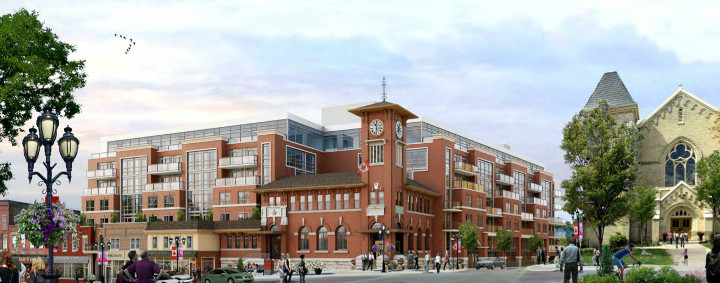
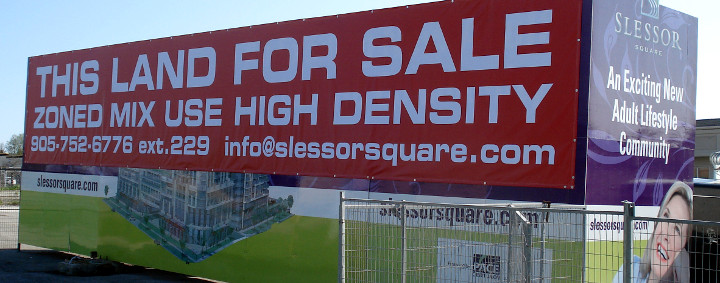
He tells us that the Slessor Square land is shown in the Plan as 15 storeys maximum (without bonusing) yet, earlier this year, the planners had recommended councillors accept a settlement offer from the developers allowing 19 and 21 storeys. Why?
Marion, slightly flustered, says Slessor Square can’t go ahead unless all sorts of requirements are met. She dives deep into planning babble, losing us along the way.
John Taylor reminds everyone there will be a separate vote on the key issues of height and density as part of the Secondary Plan approval process. He proudly proclaims authorship of this. In practice, I don’t think it will change anything.
The time to influence the professional planners was during the drafting stage, not at the tail end of a very long and drawn out process that has ground everyone down.
Ward 7 councillor, Chris Emanuel, who is increasingly cynical about the entire planning process, wonders what kind of Newmarket we want to live in and how big it should be.
Good questions.
Discuss.
22 George Street and 39 Davis Drive
The Statutory Public Meeting’s “Brass Neck Award” goes to the owner of 22 George Street and 39 Davis Drive whose representatives warned councillors that “early developers” could get a head start over others.
They were concerned that densities could be reduced for developments that are brought forward later on.
As we all know, planning approval was given for a 12 storey block with 115 apartments at 22 George in 1993. Approval was given for 280 apartments in 20 storeys at 39 Davis in 2009.
Once planning approval is given it “attaches to the land” indefinitely. In this case, still bare earth and gravel.
This is ludicrous and cries out to be changed.
Transportation Demand Management
As I tap this out, there is still no sign of the Urban Centres Transportation Study September 2013 on the Town’s website.
It is referred to on page 13 of the draft Secondary Plan and
“presents an operational analysis of the fine grain road network, the phasing of the identified improvements to the transportation network, recommended Transportation Demand Measures (TDM) and parking strategies that should be implemented to achieve (the) vision of the Secondary Plan. These recommendations have been incorporated were appropriate within the Secondary Plan policies.”
The draft goes on:
"… aggressive TDM, parking management, transit priority and other measures will be needed to encourage transit use."
I don’t necessarily disagree with any of that. But I’d like to read the study for myself. And it should have been made available before the Statutory Public Meeting.
Many people at the meeting expressed concern about the impact on their neighbourhoods of development in the Urban Centre. For this reason, if for no other, the Study should be published in its entirety on the Town website.