Gordon Prentice at Large - Politics in Newmarket




- Details
- Written by: Gordon Prentice
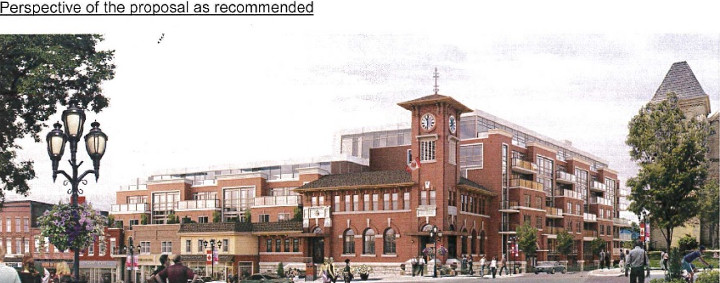
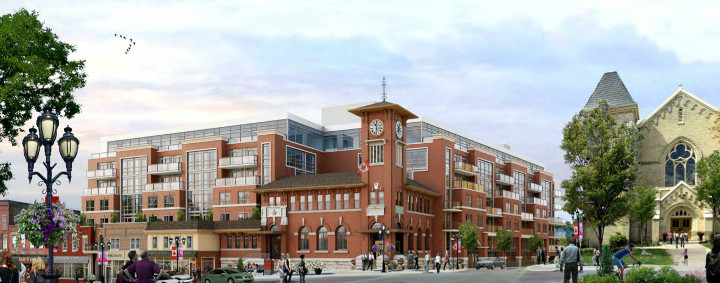
Newmarket’s Heritage Advisory Committee did the Town a great service on Tuesday (5 April) when its members unanimously rejected Bob Forrest’s ill-conceived 7 storey apartment building at the Clock Tower, smack bang in the middle of Newmarket’s historic Main Street. 
But what happens next?
A report by Newmarket planners on Forrest’s Clock Tower proposal is expected to go to the Committee of the Whole on Monday 18 April 2016 at 1.30pm. They are the High Priests of the planning cosmos whose views can easily carry more weight than elected officials.
Planners say no
The planners can recommend the Forrest application is (a) rejected or (b) approved. If they recommend rejection they will give reasons, no doubt echoing many of the concerns of the Heritage Advisory Committee. If councillors accept that advice, Forrest’s ruinous proposal is dead in the water. If Forrest appeals to the OMB (he has an appeal lodged there but it is sleeping) he will lose.
Planners say yes; councillors say no
On the other hand, if planners recommend approval (perhaps attaching various conditions) and councillors disagree then the matter will, almost certainly, go to the OMB. Following the Glenway precedent, the Town’s own planners would boycott the OMB and the Town would have to hire outside planners to make the Town’s case.
Planners say yes; councillors say yes
If the Town’s planners and councillors agree to Forrest’s Clock Tower proposal they will, after the usual planning processes have been gone through, give development approval. It is likely that the report going to the Committee of the Whole on 18 April 2016 will recommend a second public meeting. The first was held over two years ago in February 2014 and Forrest’s proposal has morphed through a number of different forms since then.
The planners’ report is also likely to give details of the land swap, without which Forrest’s proposal cannot go forward. But, perversely, councillors will only decide on this after they have approved the development proposal.
Closed meeting on land swap
The developer has already drafted the land swap agreement. Forrest told close colleagues in September last year that the draft land swap would be reviewed by the Mayor and senior staff before going to the Committee of the Whole, meeting in camera. He told them an agreement in principle had already been given.
Councillors approved the land swap “in principle” on 24 June 2013 in a closed session meeting of the Committee of the Whole. We do not know the factors lying behind that approval. However, that decision does not mean the Council must approve whatever Forrest has now put on the table.
I believe it is in the public interest for details of that closed meeting in 2013 to be made public.
The public interest
Councils, on their own volition, can choose to make all or part of a closed session public. But, before doing so, they would take legal advice. There may be privacy and confidentiality issues or other considerations. Third parties may be named. Client/solicitor privilege, a cornerstone of our legal system, would probably be invoked to draw a veil over the discussions. All sorts of matters can be concealed from public view when, in fact, there may be a public interest in disclosure. (The Town discussed the possible purchase of the Glenway lands in March and April 2008 but this important fact was withheld from the Glenway OMB Hearing years later.)
A Freedom of Information request for details of the closed session on 24 June 2013 is likely.
Why rental?
Councillors may be persuaded to give approval on the grounds that Forrest’s apartment block is now rental. Forrest told his colleagues last year that he had settled on six storeys but, with rental, there was a “real chance” they could get seven storeys.
He says the Town retreated on their aggressive stand on cash-in-lieu of parkland. This is money paid to the Town (currently 5% for residential) if parkland cannot be provided by the developer. Theoretically, it allows the Town to buy open space elsewhere.
Forrest believes rental brings real advantages. He can negotiate the quantum of development charges. He says there is precedent in Newmarket for deferring development charges for five years without interest. He also believes rental can bring permanent tax reductions. We shall see.
Our heritage is worth saving
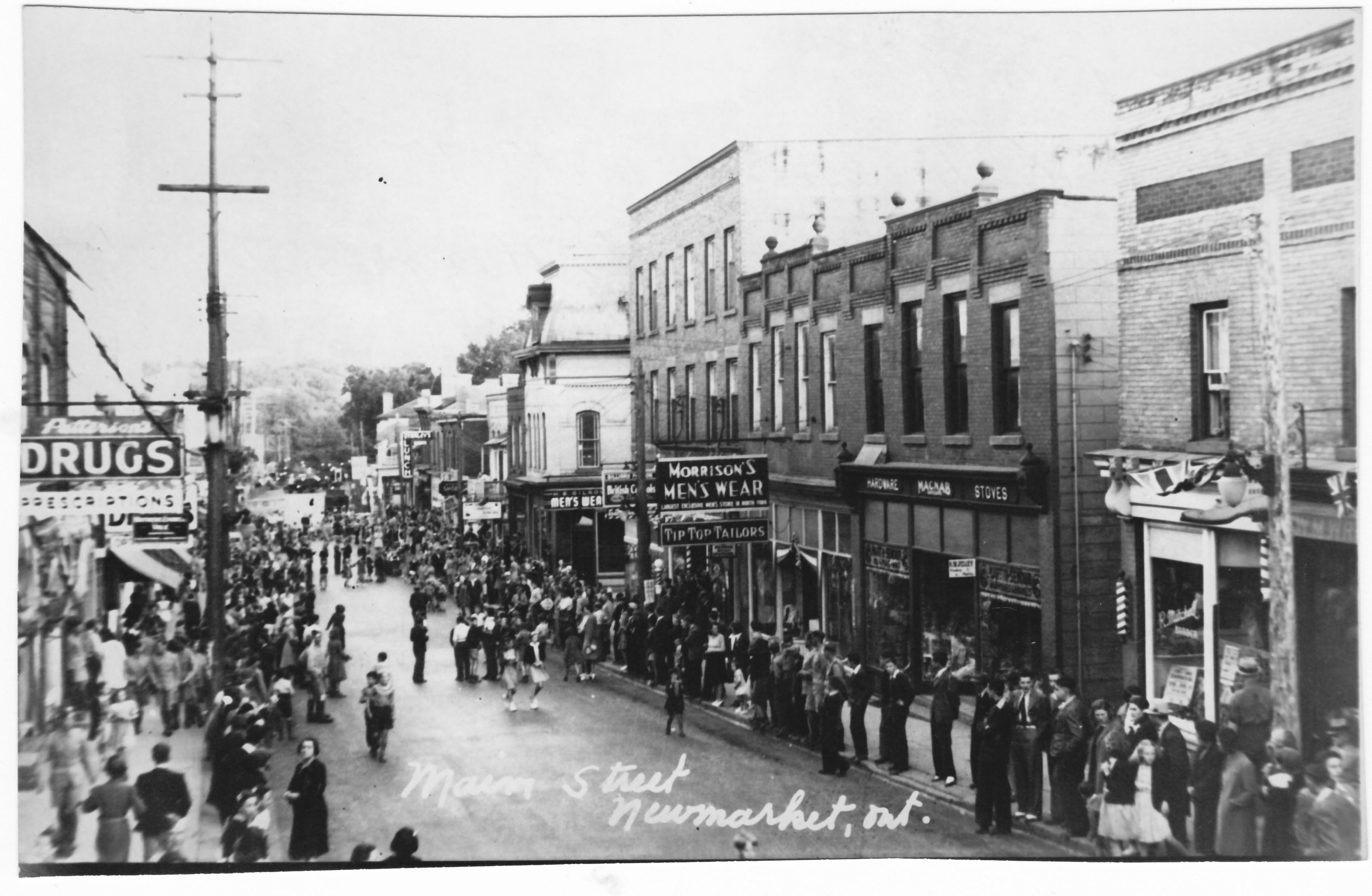
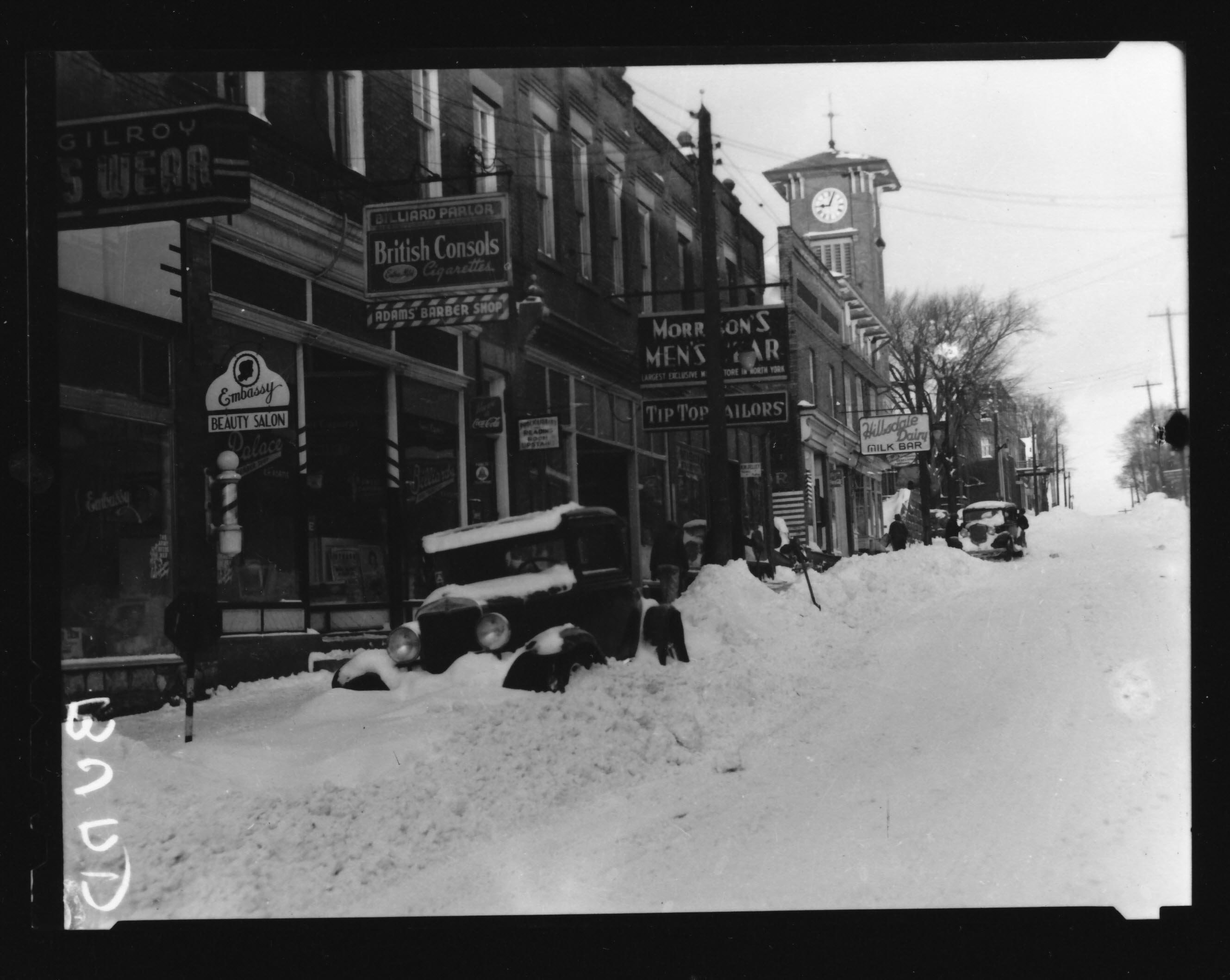
The Mayor’s speech to the Chamber of Commerce in April last year carried a photo of the iconic Clock Tower on its front page. Why? Because it symbolizes our Town. But for how much longer?
One week tonight – at 7pm on Thursday 14 April 2016 at Trinity United Church, Park Avenue - Catherine Nasmith from the Architectural Conservancy of Ontario will speak on how communities can fight back against predatory developers like Bob Forrest who target our most treasured historic areas.
All are welcome.
- Details
- Written by: Gordon Prentice
Newmarket’s Heritage Advisory Committee this evening unanimously rejected plans by developer Bob Forrest to build an out-of-place apartment block at the Clock Tower in the heart of the historic downtown.
The Committee, ably chaired by Athol Hart, gave a long list of reasons why they considered the development inappropriate. It manifestly did not fit with the Town’s Heritage Conservation District policy and there was a real danger that construction would damage the structure and fabric of other important buildings in the area.
The views of the influential advisory committee - whose members include Ward 4 councillor Tom Hempen - will now be reported to the Town’s Committee of the Whole which is expected to consider the Clock Tower application on 18 April.
When the vote was taken members of the public spontaneously burst into a round of applause.
- Details
- Written by: Gordon Prentice
The Provincial Government’s announcement allowing municipalities to move away from first-past-the-post and opt for ranked ballots is to be welcomed.
The new Municipal Elections Modernisation Bill which had its first reading yesterday at Queen’s Park, would allow municipalities to pass a by-law to bring in ranked ballot voting for the 2018 municipal elections. But we shall have to wait for important details on how it will all work.
Regulations to be brought in under the Bill are likely to provide for some form of public consultation before any change can be implemented. The Bill says:
The Lieutenant Governor in Council may, by regulation, impose conditions and limitations on the authority of a municipality to pass a by-law, including establishing standards and procedures for public consultation about a proposed by-law.
It goes on:
Regulations may authorize municipalities to conduct ranked ballot elections, and may provide that ranked ballot elections are authorized for only specified offices on a municipal council.
Importantly, the Bill also allows municipalities the option to ban corporate and union donations.
88.15 (1) A municipality may by by-law prohibit corporations that carry on business in Ontario and trade unions that hold bargaining rights for employees in Ontario from making a contribution to or for any candidate for an office on the council of the municipality.
If Newmarket bites the bullet on this one it could blow a hole in the campaign finances of some prominent candidates. Our Mayor, who sups at the corporate table, is one who immediately springs to mind.
At the last election in 2014, the “Committee to Elect Tony Van Bynen” received: $12,350 in corporate donations from Newmarket Honda, Magna International Inc, Pellacon Properties Ltd, Stronach Consulting Corp, Tim Hortons (Davies Drive), Reinrichmar Holdings Limited, Pitway Holdings Ltd (Cardinal Golf Club), Best Western Voyageur Place Hotel, P G Miller Enterprises (McDonalds), Armitage Animal Clinic, Charles Maria Holdings Inc, Tavco Realty Holdings Inc, Charles Maria Holdings Ltd, Pfaff Motors, Budget Propane Corporation, Dave Wood Holdings Limited (Dave Wood Mazda), Lloyd and Purcell Ltd, Miller Paving Limited, Lilcris Industries Limited, Cole Engineering Group Ltd and Multimatic Inc.
Other key changes include cutting the overly-long and debilitating campaign period by 120 days, opening nominations for candidates on 1 May in election year instead of 1 January as at present. The Bill also proposes a framework to regulate third party advertising along with contribution and spending limits which, again, would be set out in regulations.
All-in-all it amounts to a far reaching package of reforms which will help clean up our politics.