Gordon Prentice at Large - Politics in Newmarket






- Details
- Written by: Gordon Prentice
The unelected Chair of York Regional Council, Wayne Emmerson, last week apologised to elected members for slapping them down in public. He says sometimes he just loses it.
Joe Li and Jack Heath have been recent targets of Emmerson’s ire. 
Emmerson has a tendency to hurry Heath along, urging him to get to the point.
Jack Heath can be a tad long-winded at times but I find him thoughtful and always worth listening to.
Wayne “Back from the Dead” Emmerson has his favourites. He always defers to Markham’s Mayor, Frank Scarpitti, who can drone on interminably. I’ve never heard Emmerson utter a single critical word about Scarpitti, York Region’s capo di tutti capi and the highest paid Mayor in Ontario. Maybe that’s because Frank gets more money in pay and benefits than Emmerson’s $281,938. I haven’t checked recently.
Against streaming
Both were dead against the live streaming of York Council and Committee meetings and now we know why. Frank didn’t think he was pretty enough for the TV cameras and Emmerson, on his own admission, can be a bit bossy.
“Over the last couple of weeks I’ve had an opportunity to look at the tapes of what’s gone on and re-visit some of the tapes and I have to say to you that some comments have been made to me that (I’ve made) too many comments and I do apologise if I’ve hurt your feelings or done anything different. I sometimes lose it. We go on. So I’ll do my best not to make as many comments.”
“And the other thing is I try never ever to cut you off. And I do apologise to Councillor Heath the other day about some of the things said. I will do better as we go forward. Just so you are aware of that.”
Emmerson is currently the only member of the Regional Council not to be subject to a Code of Conduct. All the others are covered by the Codes that operate in their home municipalities (which Emmerson doesn’t have).
Naughty Boy!
But now the Region is being forced by law to bring in a Code of Conduct for its members. And not before time. A few years ago the Regional Councillor for Vaughan, Michael Di Biase, was docked three month’s pay in his home municipality for interfering with the tendering process. Naughty boy! But his York Region salary – or “stipend” – remained untouched.
And when the draft Code was brought forward for approval there were all sorts of squeals and protests.
Emmerson immediately established some kind of “working group”. I’ve no idea who is on it nor how they were selected. Nor its terms of reference. He mumbles to his colleagues:
“We did have a small working group and we kinda went through it (the draft Code of Conduct) and we made some more or less adjustments but we have another meeting scheduled for April 11 after the Committee of the Whole and we hope to be able to bring a report to Council on April 18 to finally understand what the Code of Conduct is. But we’ll have (indistinct)”
“But this is Council’s Code and this is why the Committee kinda wanted to make sure we had a bit more time with it…. It is back on the agenda (today) because we said we’d bring it back on March 21.”
The Municipal Act requires all municipalities to establish a Council Code of Conduct by March 1, 2019.
Let’s hope York Region can agree its first ever Code of Conduct by April 18, 2019.
But don’t count on it.
- Details
- Written by: Gordon Prentice
I am writing this at 8.30pm on Thursday 21 March 2019. 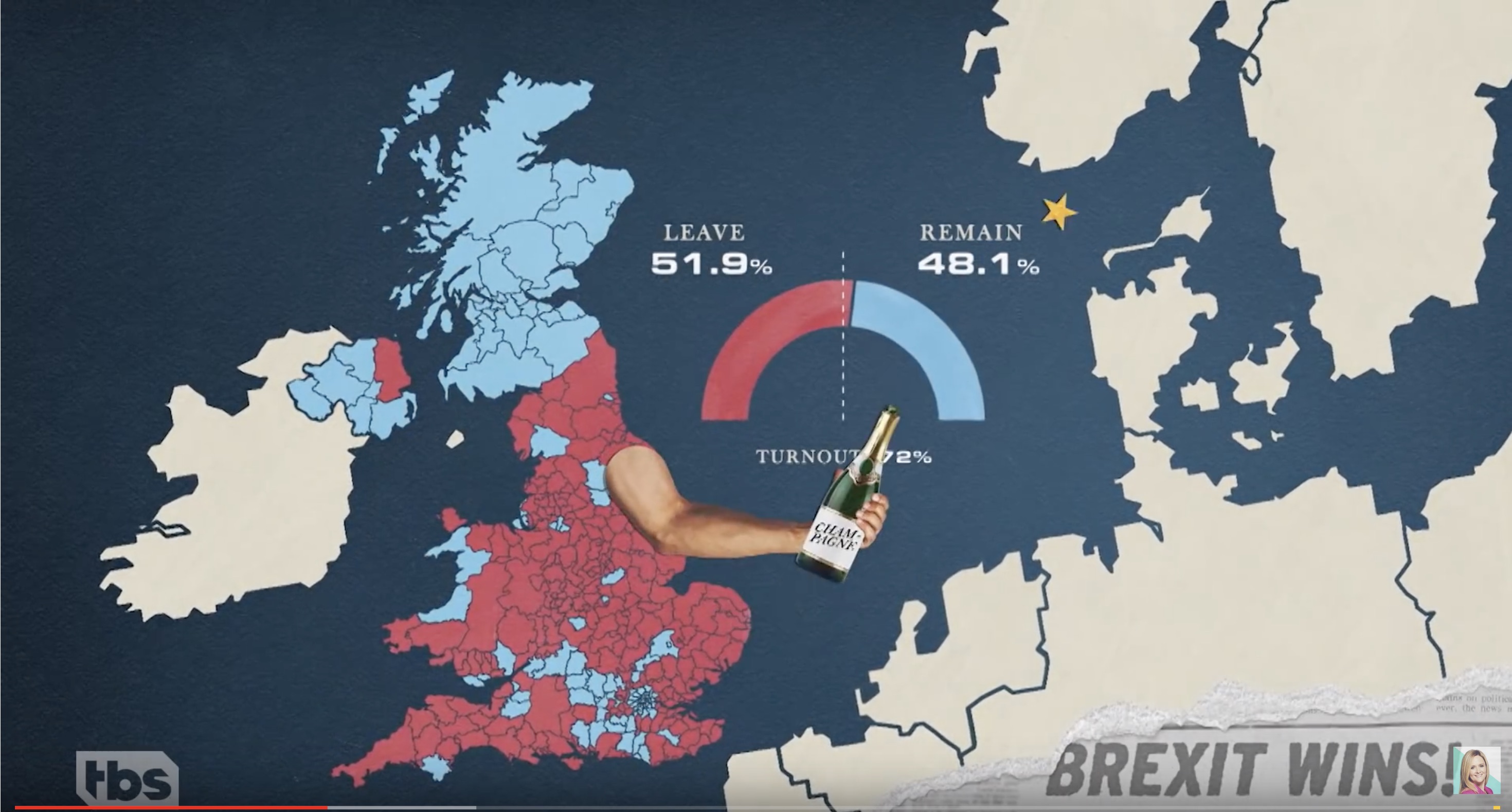
The European Council (the leaders of all the member states of the EU) has just published its final, considered view on Brexit.
If the UK Parliament does not approve Theresa May's negotiated deal (which it has rejected twice) the UK will be out of the European Union on 12 April.
Things are moving so quickly this could be old news by tomorrow morning.
To be clear, I want Britain to stay in the European Union.
But it could crash out without a deal.
I always believed we could cut the Gordian Knot by holding a second referendum on May's negotiated deal. Are voters in favour of leaving the EU on her terms or not? But the EU imposed timetable seems to preclude even this possibility.
As it happens, I was at the Newmarket Historical Society’s excellent meeting last night on the Dambusters and got talking to an old Canadian friend about Brexit. He has lived and worked in the UK and wants Britain out – even without a deal.
Oh dear!
Time for a reality check
Here is a clip to help Americans understand Brexit. (But Canadians can take a peek!) It was broadcast on 6 March 2019 and is now ancient history. But it is still worth watching.
The Bank of England under its Canadian Governor, Mark Carney, forecast last November that leaving the EU without a deal would shrink the UK economy by about 8% in the first year. This would have huge implications for jobs and prosperity. As big a dislocation as the global financial crisis of 2008.
In the Brexit Referendum on 23 June 2016 the British (Conservative) Government advised voters to vote to remain in the EU. The case is set out here. 
In the event, the voters decided to leave by a 52%-48% margin. But there was a mountain of misinformation or “fake news” that persuaded lots of people there was no downside to leaving the EU. All gain no pain.
After losing the referendum the then Conservative PM, David Cameron, resigned and Theresa May took over. To consolidate her authority she called a general election on 8 June 2017 and lost. The Conservatives squandered their majority but stayed in office as a minority administration, supported by the time-warped Democratic Unionists from Northern Ireland, a throwback Party from the days of the Protestant ascendancy. (No need for more details here.)
As Prime Minister, Theresa May nevertheless vowed to implement the results of that 2016 referendum – in which she supported the remain (losing) side.
The UK has always been a net contributor to the European Union. That is, it pays in more than it gets out. Over the years 2010-2014 the average net contribution was £7.1 billion or a little over Can$12 billion. For every £1 paid in tax in the UK a little over 1p goes to the EU.
This fed the notion that Britain leaving the EU would have barrowloads of cash to spend, for example, on the National Health Service. Allegedly an extra £350m every week. The math was always too neat and tidy to be true.
In the main older people were more likely to vote leave than younger people. And poorer parts of the country were more likely to vote leave than wealthier areas. People in Scotland voted to stay in the EU by a wide margin.
So, why was there a majority voting to leave?
As always, immigration loomed large. The UK has changed massively in its demography in my lifetime. Although there are still many places where white people make up more than 95% of the population the number of such places will inevitably diminish over time. The UK is becoming ever more diverse.
 That said, many voters believed that leaving the EU would mean “fewer foreigners”. But the UK can’t do without them.
There is free movement of labour within the EU. Leaving the European Union would mean the numbers of Polish plumbers and Romanian fruit pickers and French hospitality people would in future be controlled. But their equivalents would have to be brought in from somewhere else. The restaurant industry in London would collapse tomorrow without foreign labour.
And if UK citizens of, for example, Indian and Pakistani heritage want to marry and bring over to the UK spouses from the sub-continent there is nothing practically that can be done to stop that. There are English language tests and marriage age thresholds and “money in the bank” requirements but this is as far as you can go without having race as a litmus test and that would be completely unacceptable.
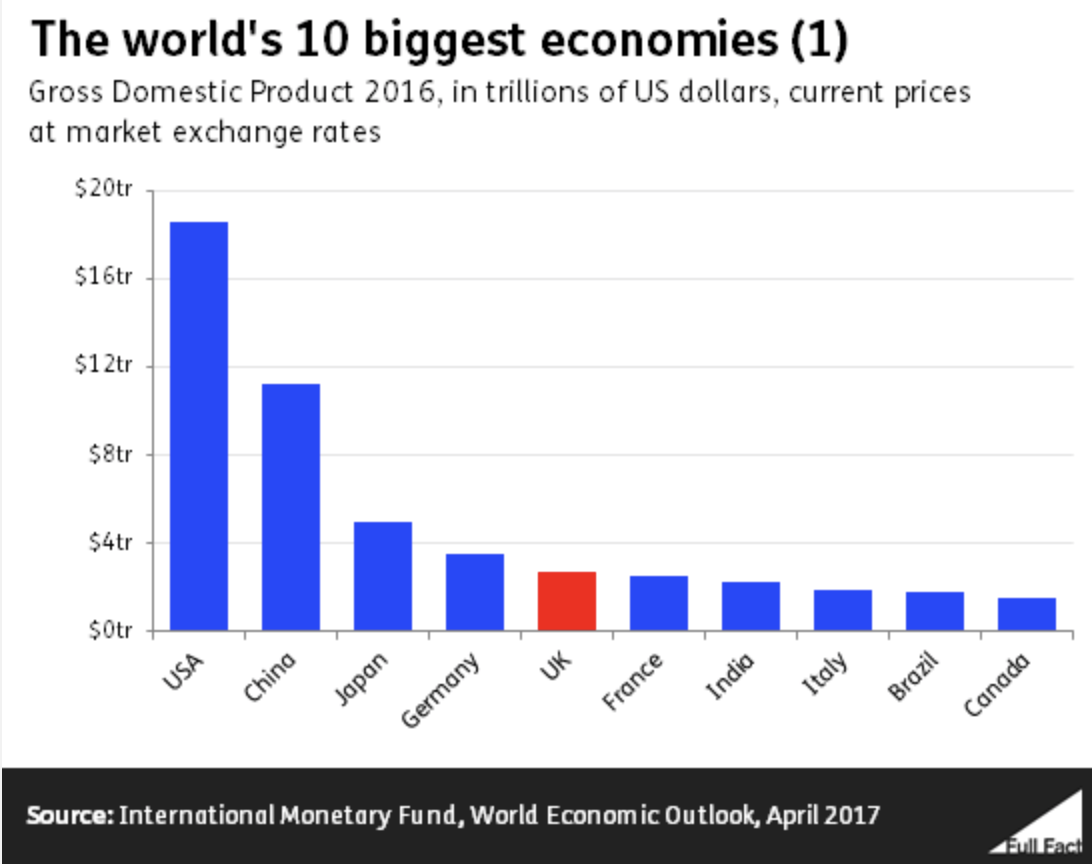
The UK is a big economy – the fifth largest in the world according to the IMF – but it is highly integrated with the EU where most of its exports go.
The traffic is two-way. In 2016 European Union countries exported goods to the UK amounting to €314 billion. That is more than the total EU exports to Brazil, Russia, India and China combined.
But after Brexit who knows what tariff barriers will be erected? Who knows what kind of deals the UK can cut with the rest of the world?
If the UK leaves the European Union we shall find out soon enough.
- Details
- Written by: Gordon Prentice
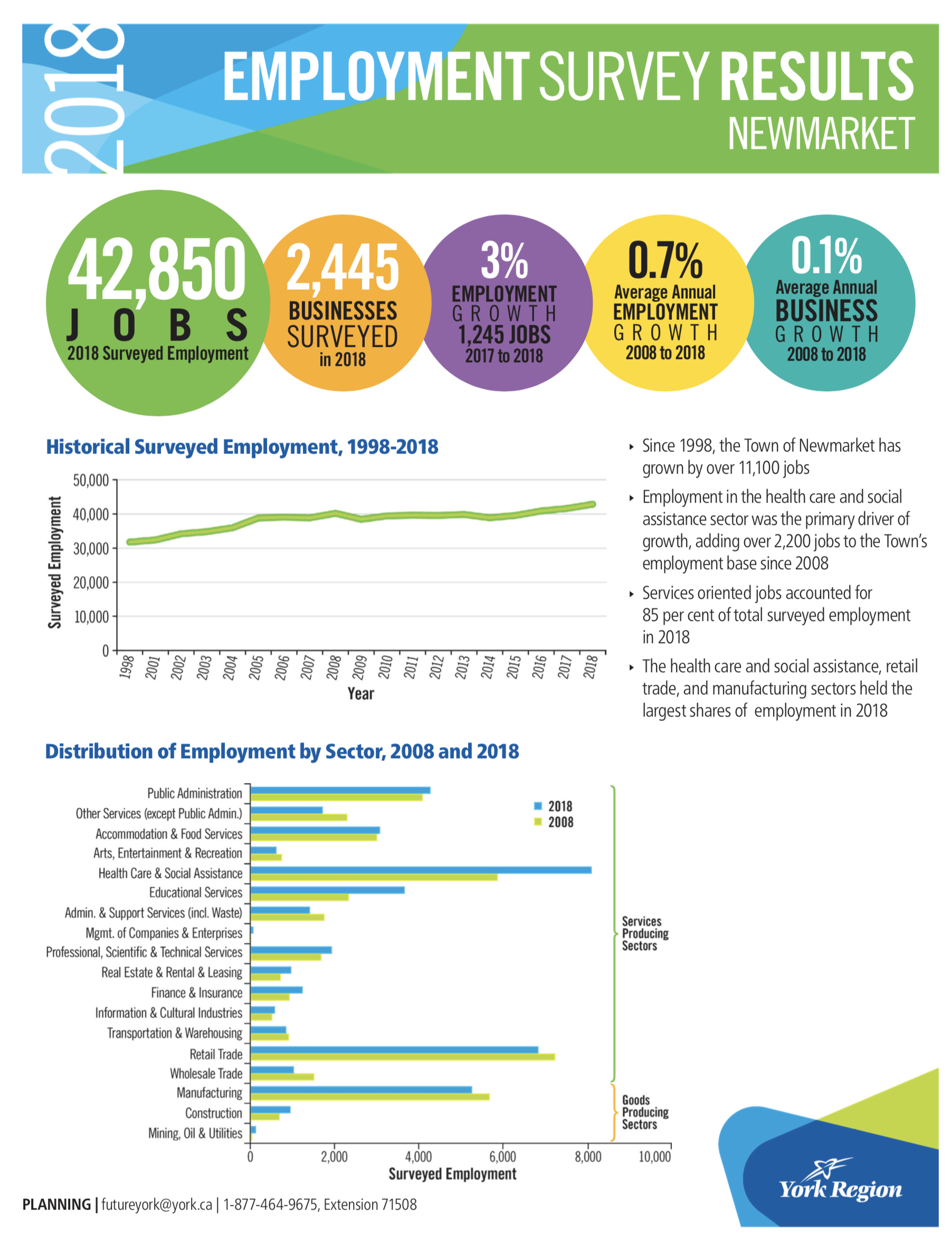
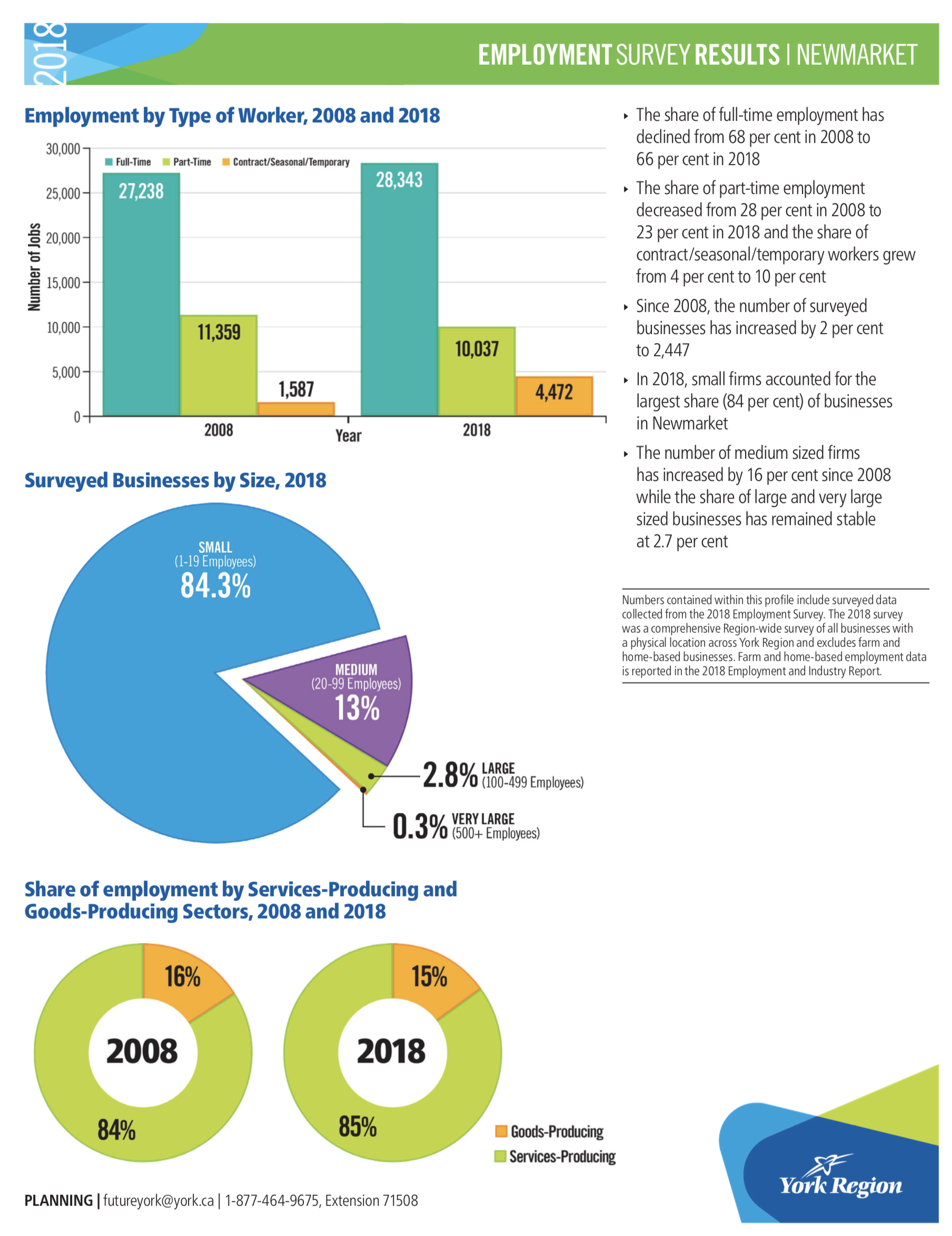
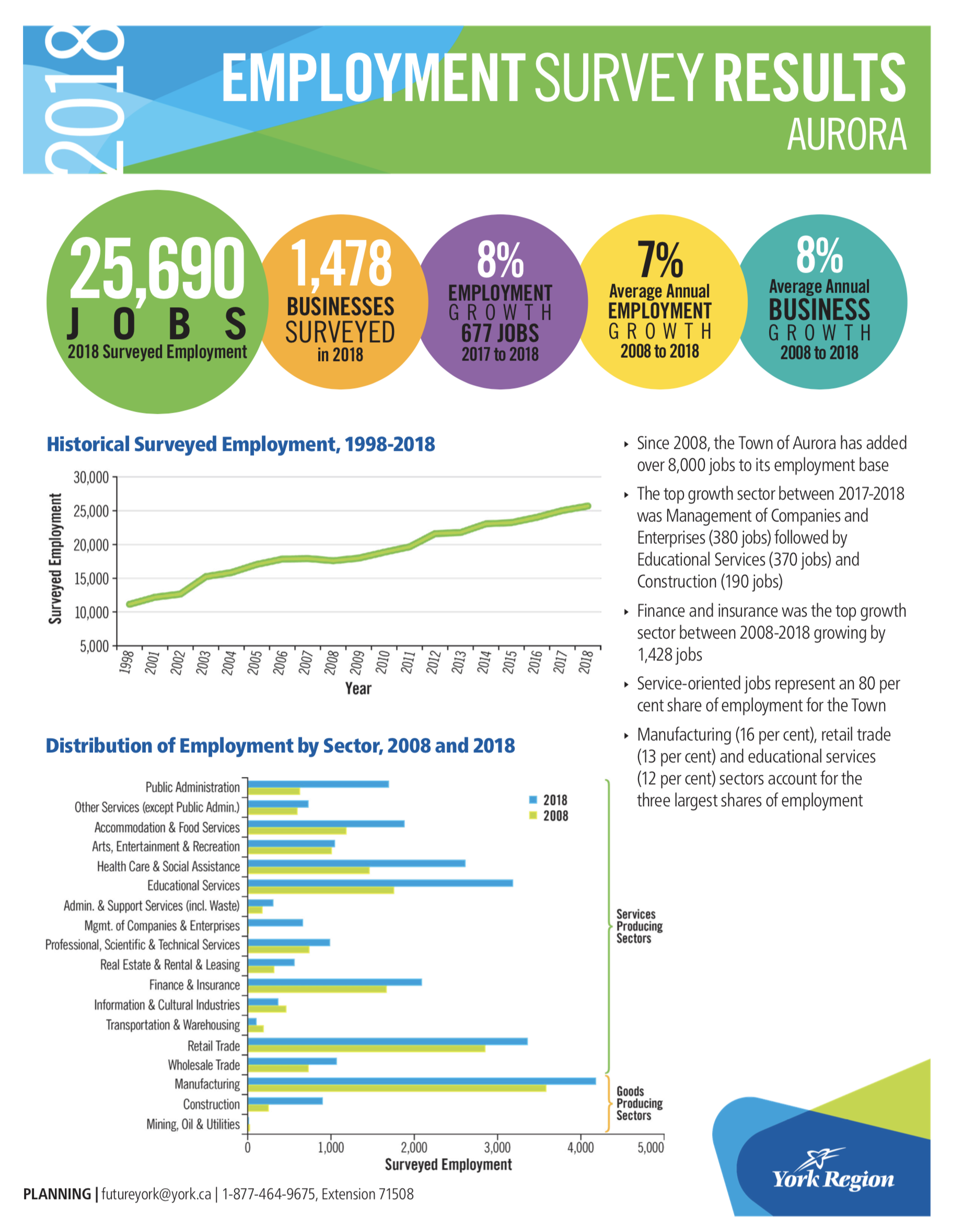
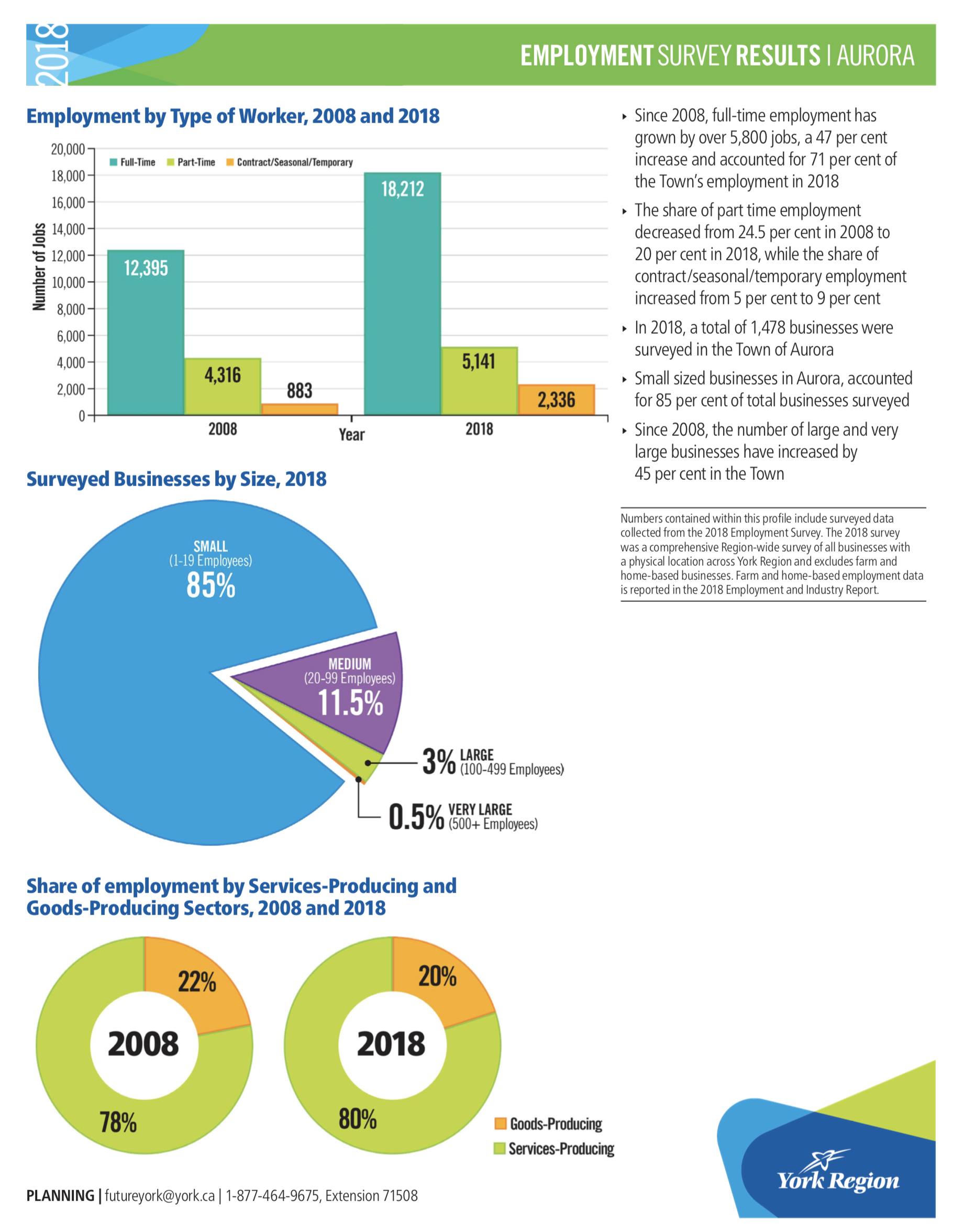
Job creation in Aurora has again outstripped Newmarket according to figures from the latest employment survey from York Region.
Aurora saw an 8% growth in jobs from 2017-18 with Newmarket posting a 3% increase.
From 2008-2018 Aurora saw an average annual employment growth of 7%. Newmarket lagged with a 0.7% increase over the same period.
Since 1998 the number of jobs in Newmarket has grown by over 11,100.
But Aurora has seen 8,000 new jobs since 2008.
Swept under the carpet
All this can be difficult to explain to the general public. So the politicians have decided to sweep it under the carpet rather than do the difficult job of explaining the differences.
In 2015 there was a tremendous kerfuffle when we were told that Newmarket generated 100 new jobs between 2009 and 2014 when Aurora got over 5,000. The figures were subsequently revised upwards but only marginally.
The annual survey of employment in each of the Region’s nine constituent municipalities is concealed from the general public to avoid embarrassing municipalities whose jobs record is less than perfect.
In 2016 York Regional Council ruled that the employment figures from each of the nine municipalities should in future be removed from the annual presentation of the Region’s Employment Survey to the Regional Council. York Region's number-cruncher in chief, the excellent Paul Bottomley, was ordered to confine his comments to what was happening Region wide with absolutely no comparisons between municipalities.
Under the table
Instead, the nine factsheets are given to members of the Regional Council “under the table” with no opportunity for comment in the Council Chamber by individual elected members. The wider public is kept in the dark.
It is a very silly way of doing things.
Any comparisons between municipalities should of course carry a health warning. Growth rates in some developing municipalities can easily power ahead of older, bigger and more mature local economies. In the same way, newly developing countries regularly post growth rates that leave developed economies looking dead in the water. But that doesn’t mean they are wealthier. So it is important to compare apples with apples.
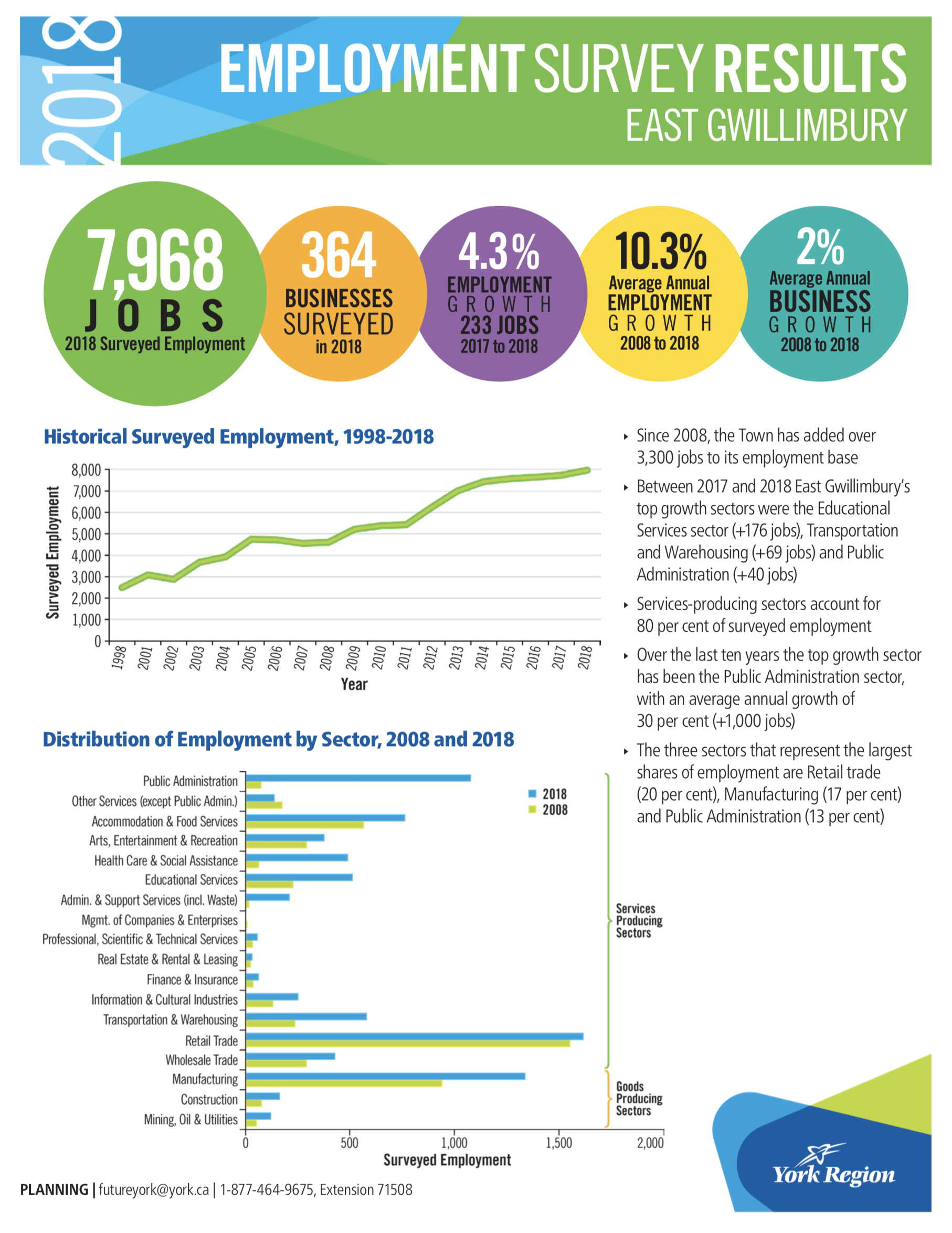
East Gwillimbury, starting with a much smaller economic base than Newmarket, saw a 4.3% growth in jobs in 2017-18. But this amounted to 233 new jobs. Newmarket's employment growth lagged as a percentage (3%) but generated 1,245 new jobs.
York Region as a whole is an economic powerhouse. It is a top destination for business. The latest review tells us:
“At 2.4%, employment growth in York Region outpaced national and provincial employed labour force growth between mid-year 2017 and mid-year 2018, of 1.1% and 2% respectively. Over the past five years York Region has grown at an average annual rate of 2.6%, outperforming average growth rates in the national (1%), provincial (1.2%) and GTA (1.6%) economies.”
The data contains some fascinating stats. I learn the real estate sector was the fastest growing sector with an average annual increase of 7.4%, increasing by 10,850 jobs. The educational sector doubled the number of jobs, adding over 19,700 jobs at an average annual increase of 7.3%. Finance and insurance and healthcare and social services added 11,000 and 17,000 new jobs respectively.