Gordon Prentice at Large - Politics in Newmarket







- Details
- Written by: Gordon Prentice
On Thursday (12 August) Metrolinx confirmed it plans to extend the all-day two-way 15-minute GO train service north from Aurora to Bradford.
This is - or should be - big news.
Aurora had previously been the northern cut-off point for the 15-minute service.
Metrolinx says
"the change is possible thanks to further study and optimization of service plans."
The details are still hazy. There is no precise timetable and the question of who pays for the necessary grade separations in Newmarket and at Green Lane is still up-in-the-air, a matter for negotiation.
A 15 minute service to Bradford is impossible without very expensive grade separations at Mulock Drive and Davis Drive here in Newmarket.
The engineering and construction work at Davis Drive is likely to be particularly challenging.
The announcement from Metrolinx comes almost 11 months after East Gwillimbury Council called on the agency to accelerate plans to bring the 15-minute service north to the GO Rail Station at Green Lane.
More to follow.
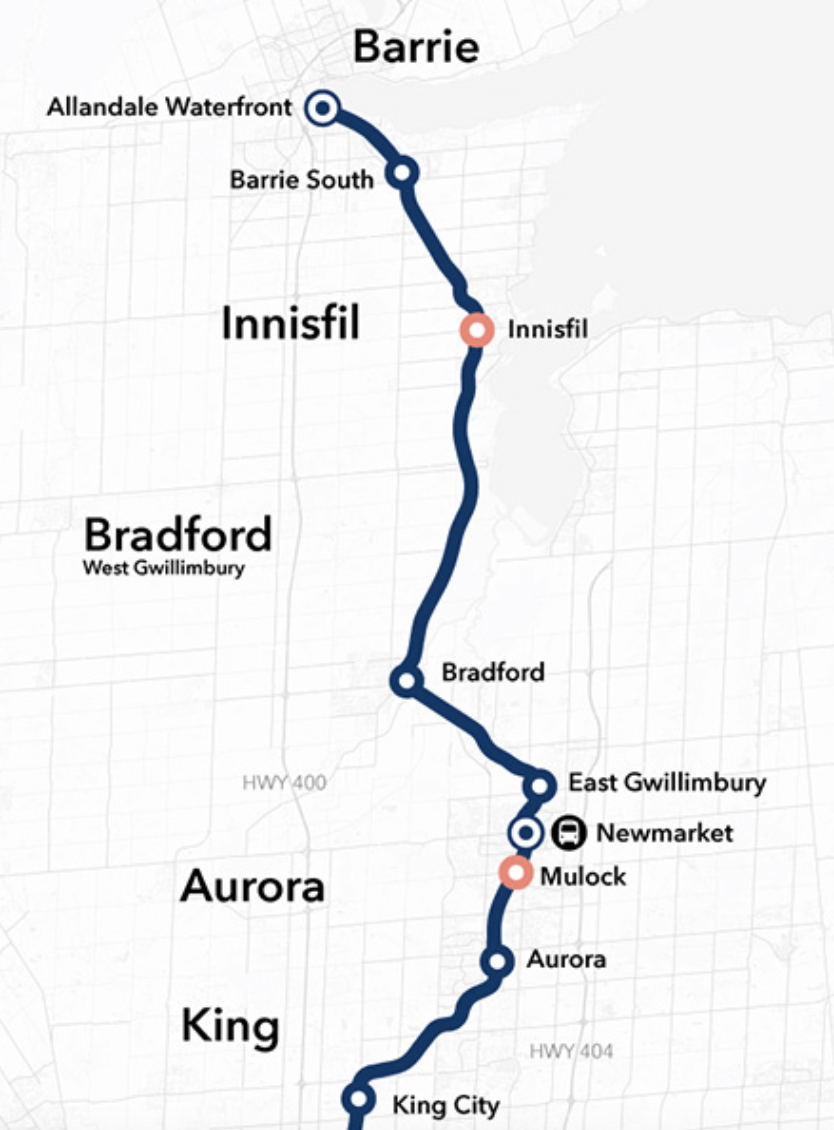
The graphic below shows the new GO Rail Stations at Innisfil and Mulock
- Details
- Written by: Gordon Prentice
Last night’s Town Hall made a compelling case for a new Southlake.
The hospital’s Chief Executive, a former nurse, Arden Krystal, told us Southlake is literally bursting at the seams. We learn that 90% more physical space is needed and there is no room to expand on site. The main buildings are over 50 years old and are near the end of life.
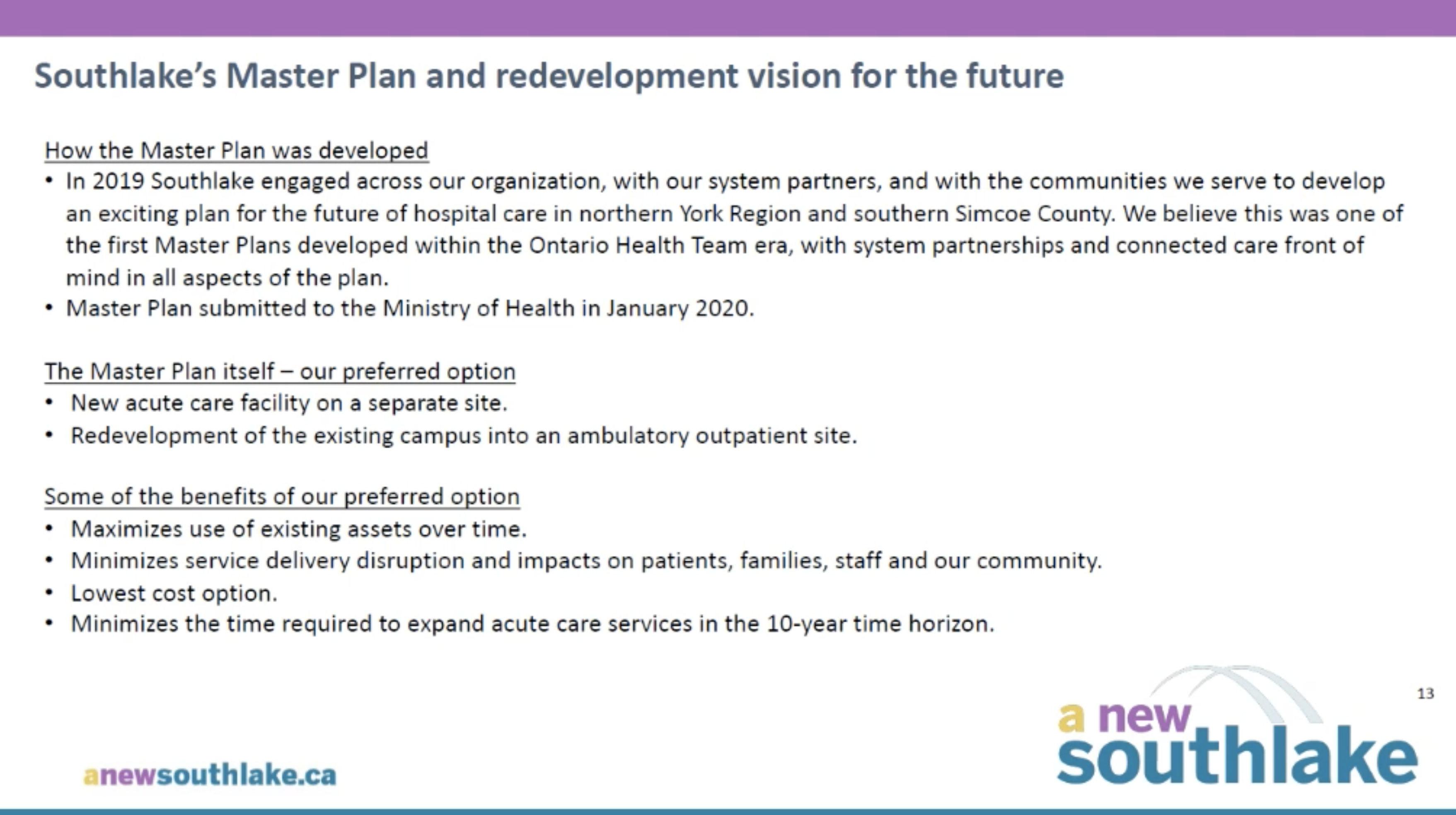
Southlake wants to keep the present Davis Drive site and re-purpose it for walk-in or ambulatory patients. A new greenfield site would focus on acute and very technical medicine. It would cost an eye-watering $1 billion at the very least with the Province essentially footing the bill. (The Chief Executive was hopeful some land could be gifted by benefactors.)
The Closer the Better
For the first time Arden Krystal gives some clues about the possible location of the new Southlake. She would not want it to be at the far end of the hospital’s catchment area. It would be more efficient to locate it reasonably close to the Davis Drive site. Ideally, it would be within 5km – 10km of the existing site
“and the closer the better”.
This makes sense. Even with the separate ambulatory/acute designations it seems likely there will be traffic between the two in terms of medical staff and at least some patients. And it seems improbable that very expensive medical equipment will be duplicated at both sites unless it is absolutely essential.
Health and the Newmarket Economy
Newmarket’s Mayor, John Taylor, believes Southlake is a regional asset which serves a wide catchment area beyond the town. He must also be acutely aware of the importance of health and health services to the local economy. But, over time, will medical and allied medical services migrate to the new location?
York Region’s 2019 Employment Survey of Newmarket tells us:
“Employment in the Health and Social Assistance sector was the primary driver of growth, adding over 2,500 jobs to the Town’s employment base since 2009.” (My underlining for emphasis)
The parent document, York Region’s Industry and Employment Report, regularly highlights the importance of industry “clusters” which
“encourage networking, attract investment, innovation and facilitate the incubation of new business…” (2017 report)
This is true of the health sector as of any other. The gravitational pull of Southlake in Davis Drive draws medical and allied medical services into the area.
60-80 Acres needed
Can the 60-80 acres Southlake needs for its new acute hospital be found within Newmarket? If not, where will the new Southlake end up and what criteria would be used for selecting a suitable site?
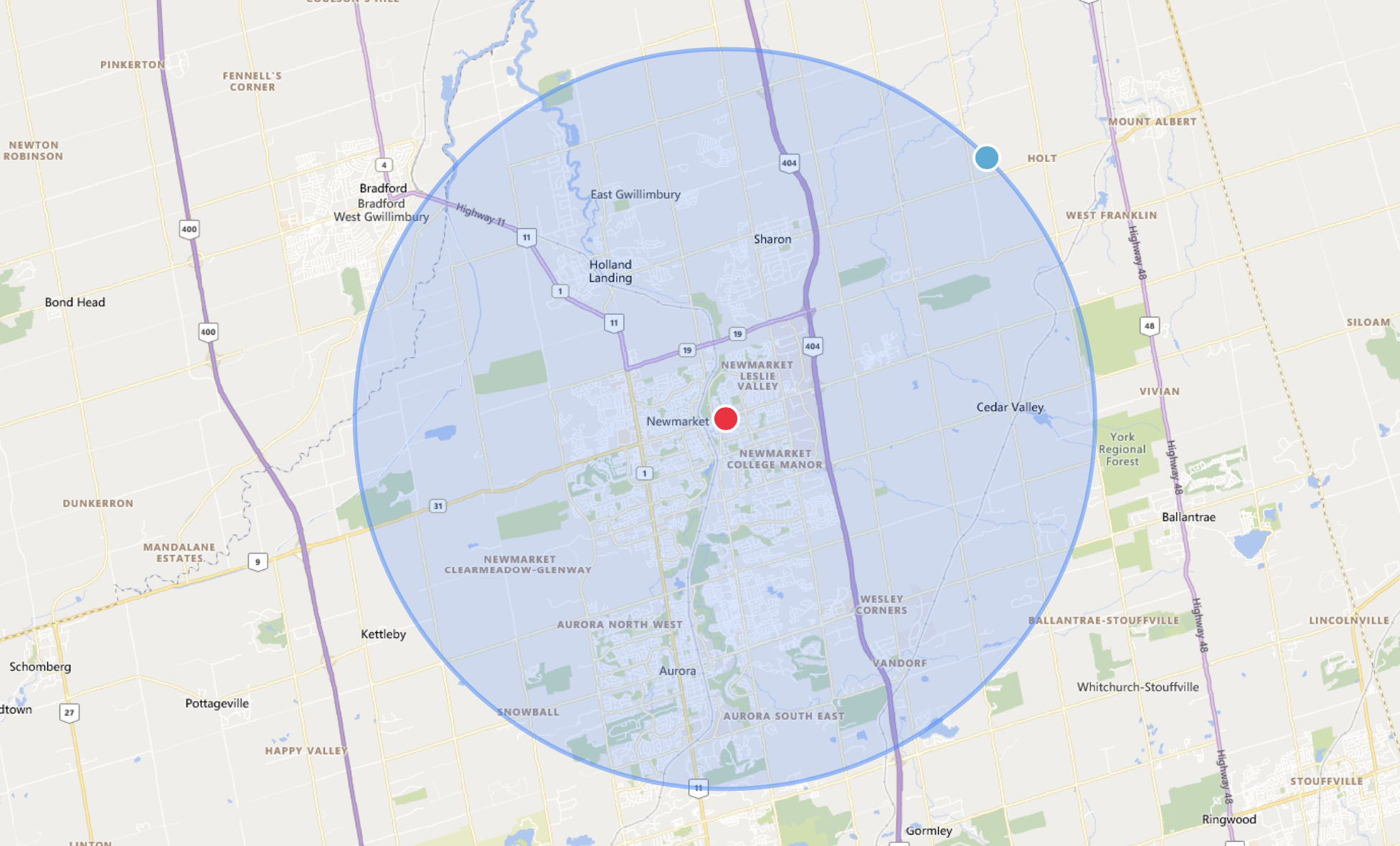
The map above shows the area within a 10km radius of Southlake.
Lakeridge Health in Durham (which is a large community hospital like Southlake) is currently going through this very process. It says it needs at least 50 acres which, amongst other things, should be not be in the Greenbelt nor in the Oak Ridges Moraine nor on prime agricultural land.
The site would have to be at least 10km from another acute care hospital with an emergency department. They list other site considerations (likely to apply to Southlake also) such as land acquisition costs, proximity to residential areas and regional corridors such as the 400 series of highways.
I have no idea where the new Southlake will be located. But I guarantee the Planning Departments in our neighbouring municipalities will be scouring their patches looking for a suitable site.
The Auditor General of Ontario’s Annual Report for 2016 has the results of value for money audits of large community hospitals such as Southlake and Lakeridge Health.
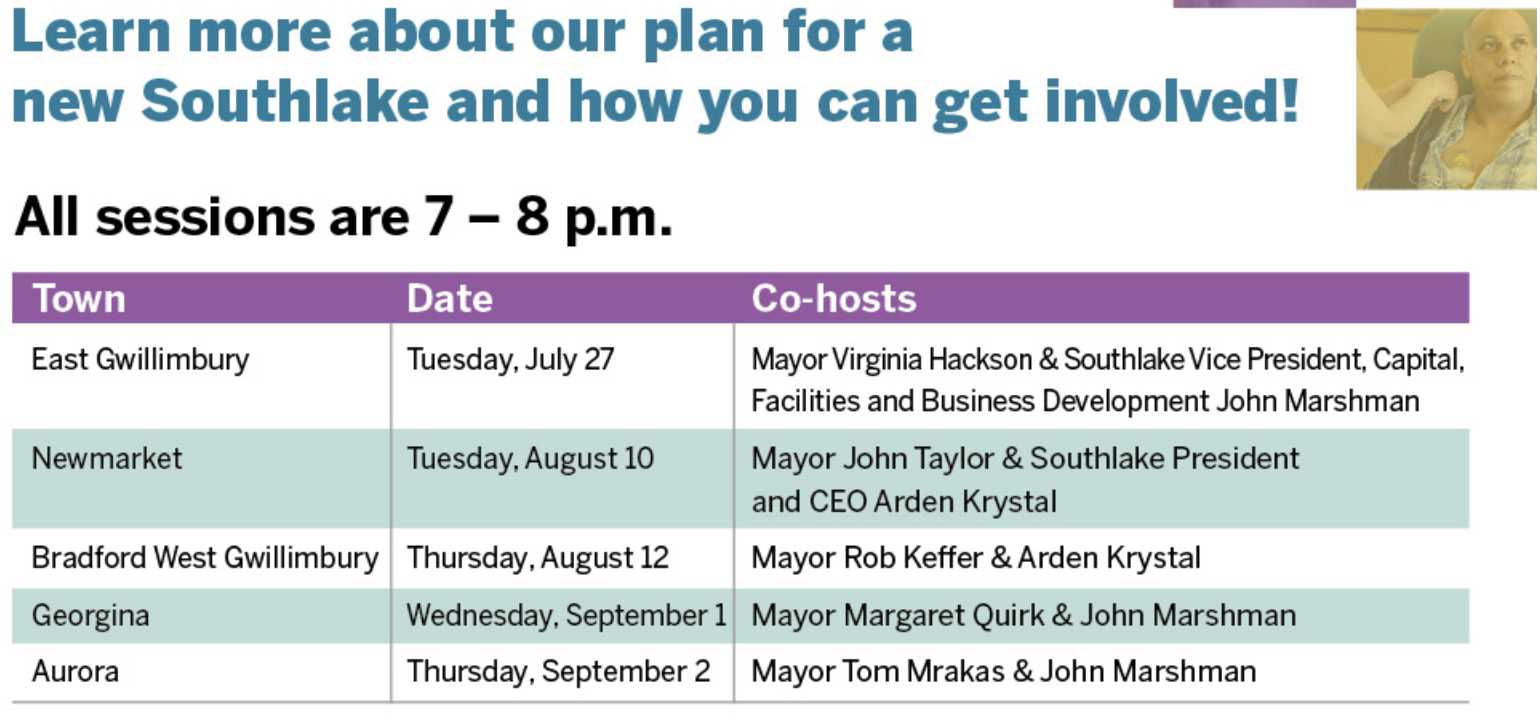
Update on 11 August 2021 from Newmarket Today: "It's going to take all of us. Southlake pitches new hospital to Newmarket citizens."
- Details
- Written by: Gordon Prentice
By all accounts an early election could be just around the corner though I tend to agree with Jagmeet Singh who says there is no good reason to call one, especially in the middle of a pandemic that remains unconquered. 
But if we are plunged into an early election then sitting MPs have a head start over their challengers – they have the name recognition and high visibility that incumbency and taxpayer funded advertising budgets bring.
Decades ago, as a new MP at Westminster, I recall an old hand telling me: “Never do good by stealth.” It was good advice. MPs are in the business of blowing their own trumpets. It goes with the job. The question is: who pays?
Once an election has been called candidates’ spending is strictly regulated by law but, until then, MPs can advertise their services and, of course, their opinions on the taxpayers’ dollar.
Spending up six-fold
Latest figures from the Parliament of Canada website show Newmarket-Aurora’s Tony Van Bynen has increased his advertising spend six-fold from the last quarter of 2020 to the first quarter of 2021 – the latest period for which figures are available. In the three months from January to March this year he spent an impressive $14,856.22 telling us what he is up to.
MPs are permitted to spend up to 10% of their annual office budgets on advertising. This allows Van Bynen to spend $40,417 on advertising which he is only now beginning to ratchet up after a slow and modest start.
Within his latest quarterly claim for advertising, $5,850 went to Bellwether Technologies. In a previous quarter the company was paid $1,324 for “professional communications services”.
But what does Bellwether actually do for this money? Only two other members of the Liberal caucus in Ottawa have contracts with the firm. There are few clues there.
Robocalls
Bellwether’s website mentions telephone Town Halls but they also do live voter persuasion calls and provide voter contact services. 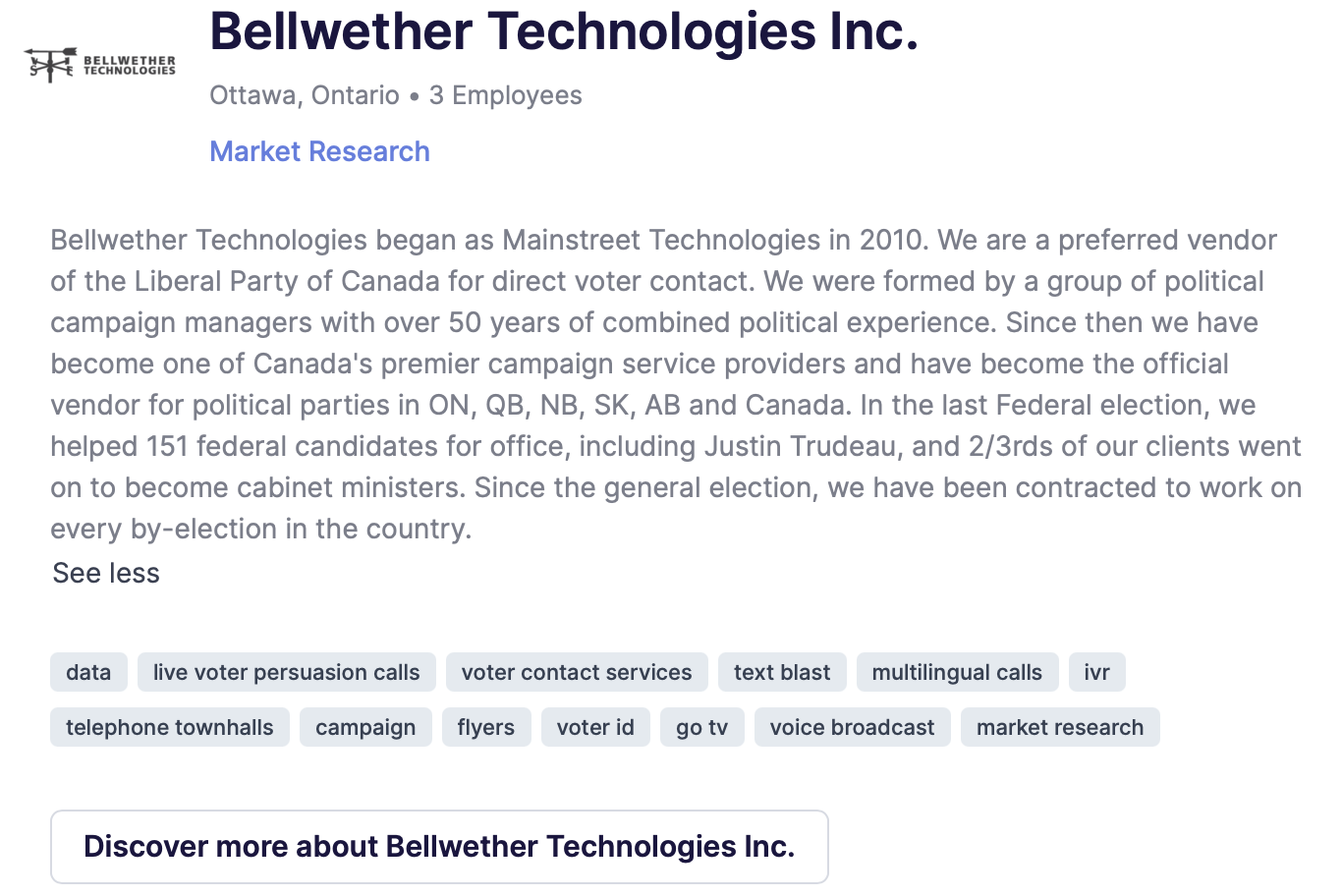
Bellwether Technologies is deeply involved in political campaigning. The company says it is the preferred vendor of the Liberal Party of Canada for direct voter contact.
The company is registered with the Canadian Radio-television and Telecommunications Commission as a “calling service provider” allowing the firm to identify voters and provide live or robocalls to voters during elections. The Liberal Party makes use of Bellwether in its election campaigns.
A foot in both camps
Bellwether appears to have a foot in both camps. It does overt political campaigning work while apparently also doing other non-political stuff such as setting up telephone Town Halls and constituent contacts.
Van Bynen does robocalls to his Newmarket-Aurora constituents but who gets contacted and why? Are the calls made randomly? Or is there a database listing constituents’ attributes?
And can the bona fide constituency and casework management side, and the legitimate telephone Town Halls and robocalls paid for by the taxpayer, ever shade into the political work – paid for by election campaigns? And if it did, how would we ever know?
Data Sciences and NGP
In the way of these things, the Conservatives recently alleged that Liberal MPs have been using parliamentary funds to pay for services from companies that provide two of the governing party’s most important digital campaign operations, and that also run its powerful voter-contact database – Data Sciences and NGP.
The Globe and Mail ran a series of articles on the issue after examining MPs’ expenses filed in the House of Commons. The investigation showed:
“149 Liberal MPs, or 97 per cent of the caucus, made payments out of their office budgets to Data Sciences Inc., founded by a close friend of Justin Trudeau.”
Fired up by the Globe and Mail’s reporting, the Conservatives forced the recall of the House of Commons Ethics Committee which, after hours of debate and much feigned outrage, left the matter hanging in the air, unresolved.
Smear campaign or grey area?
The Liberals clearly believe the Globe and Mail revelations don’t amount to a hill of beans. It is a wholly predictable smear campaign from their political opponents.
The NDP’s Alexandre Boulerice says the Party was disturbed to learn that almost the entire Liberal caucus had given parliamentary funding to Data Sciences and NGP.
“The lines have been blurred; this is a grey area… Is the Liberal Party of Canada spending parliamentary funds on a database that it uses for partisan purposes? It is entirely appropriate for us to ask that question, especially since Data Sciences is owned by Thomas Pitfield, a personal friend of the Prime Minister.”
Liberals on the Ethics Committee insist there is a firewall between these databases to ensure that the information collected in an official capacity is not mixed with partisan databases – and in any event they say the NDP and the Conservatives do exactly the same as the Liberals. The proverbial pot is calling the kettle black.
Unannounced audits
One way to guard against the possibility of abuse would be for the House of Commons authorities to permit unannounced audits of MPs’ constituency databases to ensure there is an unbreachable firewall between those constituency casework databases and those used for voter contact and election campaigning.
There would have to be two separate stand-alone systems that couldn’t talk to each other.
But, on the strength of what we know at the moment, how that would work in the case of Bellwether Technologies is a debateable point.
Bellwether provides database services:
Bellwether is a decentralized company: