Gordon Prentice at Large - Politics in Newmarket


Is a 15-minute GO Train service to Newmarket and East Gwillimbury on the cards or is it a pipedream?
- Details
- Written by: Gordon Prentice
Over a year ago, on 22 September 2020, East Gwillimbury Council formally requested Metrolinx to accelerate the timetable for bringing the planned 15-minute GO Train service north from Aurora to Green Lane. 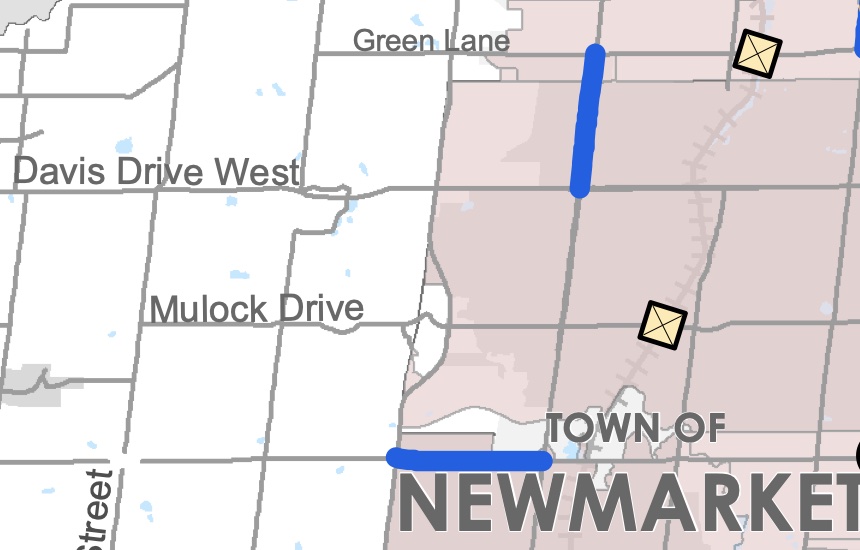
East Gwillimbury, home to Caroline Mulroney, the Minister of Transportation, anticipates a huge population increase of over 150,000 residents by 2051. The area around the GO Rail station at Green Lane is planned to accommodate 28,750 new residents. The Council says this kind of growth needs a fast train service. I agree.
After taking a leisurely eleven months to think about it, Metrolinx announced on 12 August 2021 it is indeed planning to extend the 15-minute service north from Aurora to Bradford, taking it past Green Lane in the process, but, once again, there is no timeline.
East Gwillimbury councillors will be getting a staff report on the latest state of play on 7 December 2021.
Plainly, East Gwillimbury can only have a 15-minute service if we, downstream in Newmarket, get one too.
Grade separation
But is it possible to run an all-day two-way 15-minute GO Train service north from Aurora to Bradford without a grade separation at Davis Drive in Newmarket? For the moment, we live with a quaint level crossing complete with flashing red lights and clanging bells.
Without grade separation there will be huge traffic jams and back-ups in and around Davis Drive – one of Newmarket’s designated growth corridors, along which runs a bus Rapidway that cost millions and which is designed to speed passengers on their way.
Transportation Master Plan
Enter York Region’s transport planners. They are currently updating the Transportation Master Plan (TMP) which sets goals and priorities for the next thirty years.
These Master Plans are revised and updated every five years or so (the last one was in 2016) and list strategic objectives – such as making better use of our roads and enhancing partnerships with others such as Metrolinx.
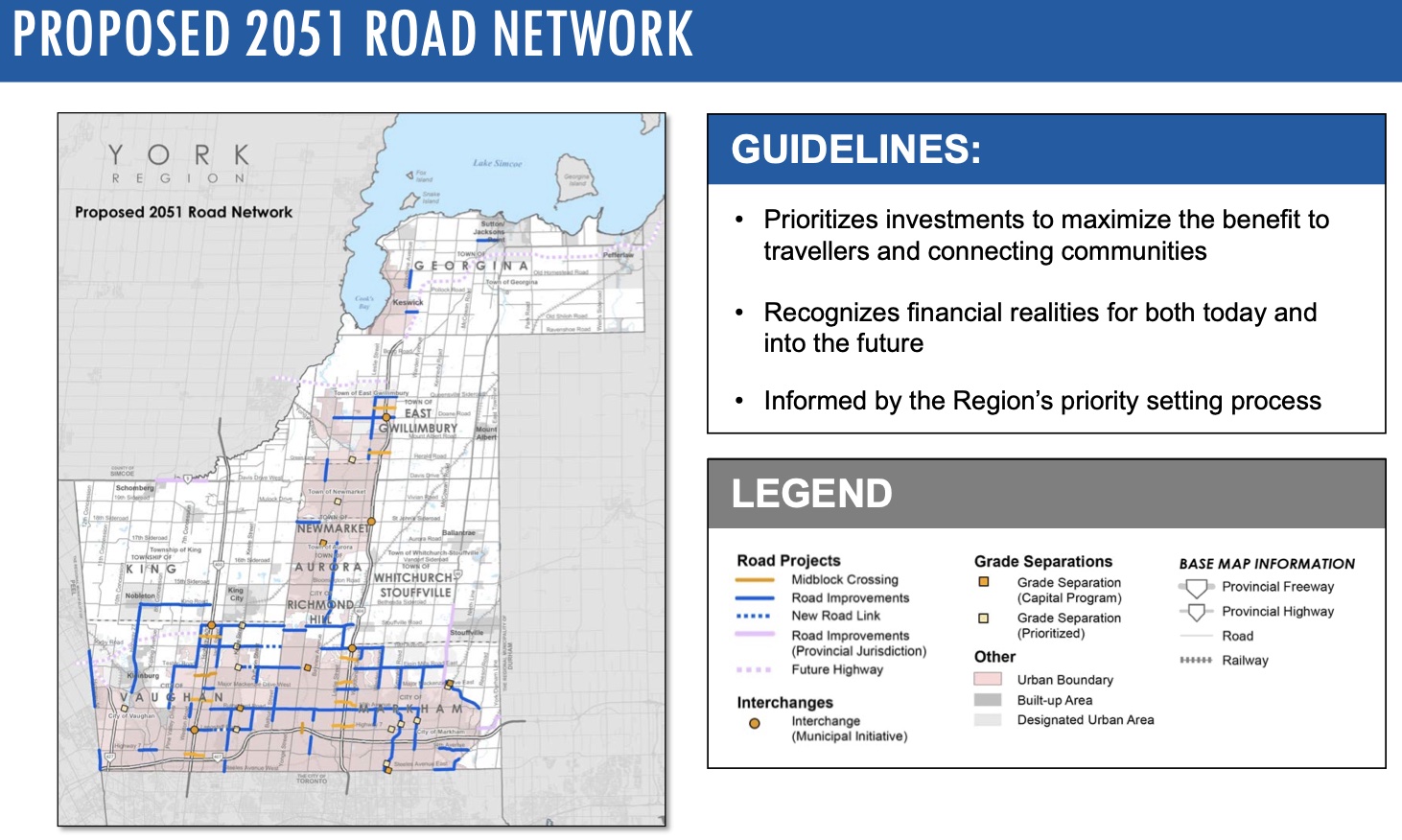
As part of this exercise, they offer us a glimpse of the future, showing the proposed road and transit networks in 2051. A report is going up to York Region’s Committee of the Whole next Thursday (11 November).
Astonishingly, there is no grade separation shown at Davis Drive – without which a 15-minute GO Train service is impossible. The map shows one at Mulock Drive and another at Green Lane in East Gwillimbury – which is a step forward - but without grade separation Davis Drive will be a colossal bottleneck. (Map right shows the grade separations in 2051 as yellow squares marked X) 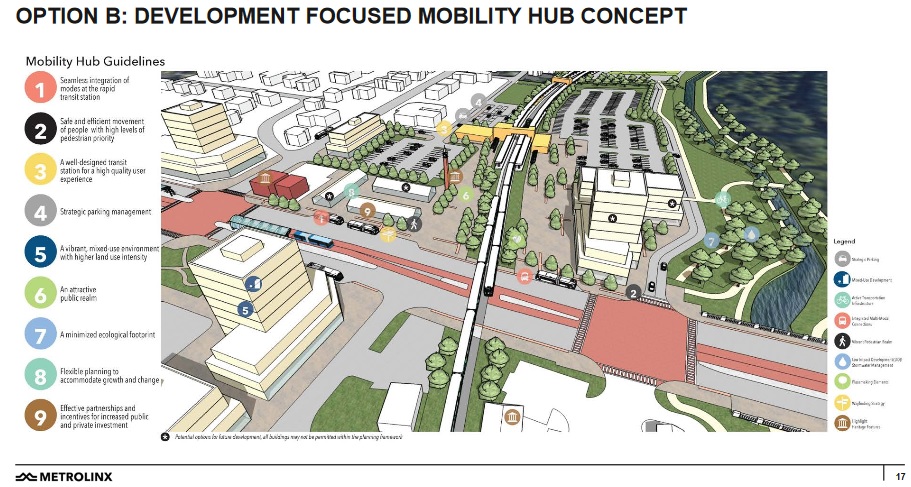
The draft TMP will go to the Regional Council in March next year with a final round of public consultation in the Spring. The Regional Council is expected to give final approval in June 2022.
Kicking the can down the road
But will the new updated TMP trigger studies that should have been done years ago?
The 2016 Master Plan (at page 149) mentions Davis Drive as a “special study area” which is “constrained in terms of network capacity” and “needs further analysis”:
“The increasing frequency of crossings of GO Trains across Davis Drive and the associated delays to both cars and transit vehicles have been identified as key issues and follow-on studies are needed to explore alternative solutions.”
Whatever happened to these studies? How is it possible for these “key issues” to be kicked into the long grass when the results will determine whether or not Metrolinx can deliver a 15-minute train service to the north?
In 2017 we got a mobility hub study from Metrolinx on the GO Rail station at the Tannery on Davis Drive but it ignored the elephant in the room – grade separation. (See graphic, right)
Broad brush.
The TMP focusses on infrastructure, explaining in broad brush strokes, where and when it is likely to be needed.
But the report going up to Regional Council members next Thursday tells us the 2022 TMP update will not include the detailed phased infrastructure maps that summarize network requirements in five-year horizons which were included in the 2016 TMP.
We learn that infrastructure improvements – where they are to be made and how they are to be paid for – will be in the Region’s rolling 10-year Roads and Transit Capital Construction Program which is approved annually.
So, with all these qualifications and caveats, the proposed plan reduces
“the number of road-rail grade separations to reflect the significant capital and operational costs”
Where are the estimates for the likely costs of grade separations? We know how much the Bradford Bypass will cost (give or take $700M) but no-one can tell us how much a grade separation will cost at Davis Drive.
This is no way to plan for the future.
When Metrolinx announced in 2016 that the 15-minute all-day two-way GO Train service would terminate at Aurora the first reaction of the then Mayor of Newmarket, the famously gradualist Tony Van Bynen, was to accept the decision, saying we should
“ease into it as we go forward”.
It may take much longer to ease into it than he ever imagined.
See also: The Greater Golden Horseshoe Transportation Plan - discussion paper.
Update on 8 November 2021: East Gwillimbury grapples with growth target
and from the Premier's Office: Ontario Fully Funding the Bradford Bypass. And from Newmarket Today: "A no brainer. Ford announces full funding for the Bradford Bypass"
See also: From the Toronto Star 20 November 2021: Doug Ford is spending billions on highways. He should look farther down the road.
Update on 24 November 2021 from the Toronto Star: Build highways and traffic will follow
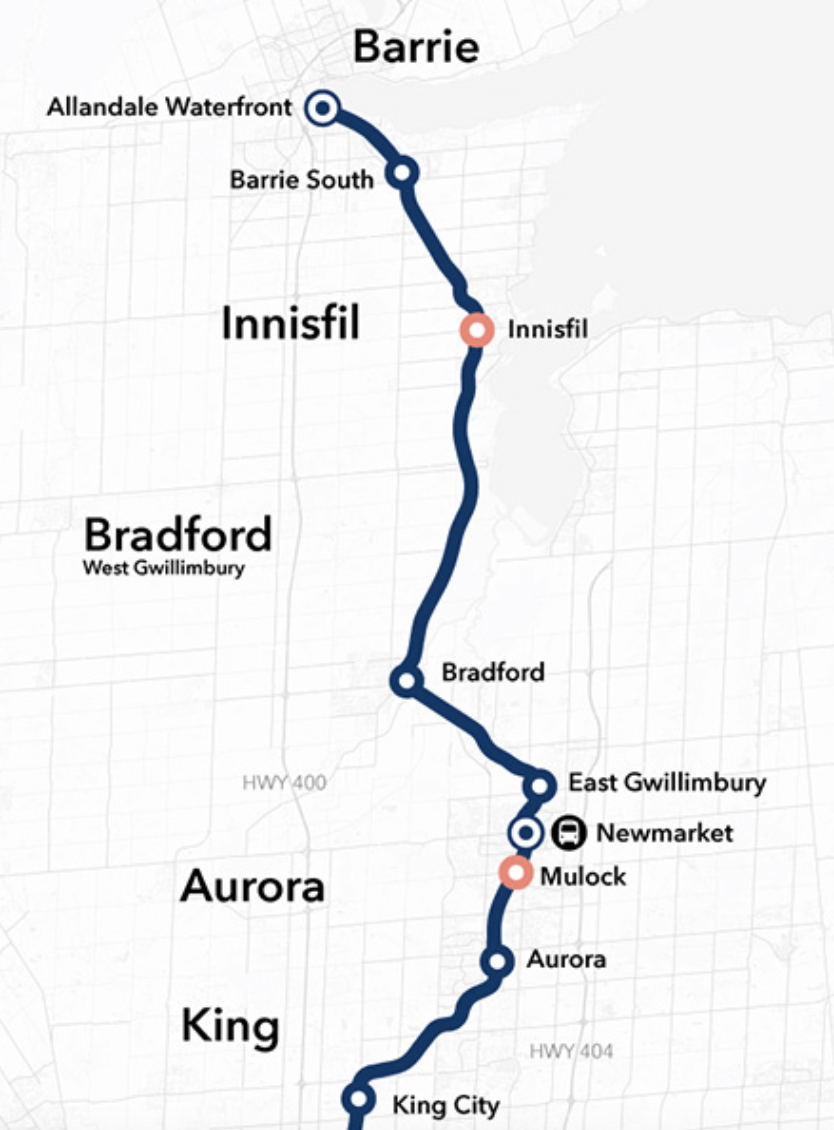
Graphic below shows the GO Rail stations. Orange ring shows proposed new station.
Below: From the 2022 York Region Transportation Master Plan public consultation materials
- Details
- Written by: Gordon Prentice
Tomorrow (1 November) Tom Vegh will give his report back to Newmarket councillors on the controversial vote by York Regional Council to amend its own Official Plan and redesignate Greenbelt land in parts of Vaughan and Markham from “agricultural” use to “rural” as requested by a group of landowners and developers. This change, which he supported, allows very different uses on Greenbelt land.
Tom will say it is much ado about nothing.
At the Regional Council last Thursday (28 October) Tom delivered a 72 second critique of the developers’ amendment, explaining his position.
“Thank you. A quick little comment. I’d like to make this comment primarily because of all the comments I am seeing on social media about this and what we're doing. And I just wanted to say that the Greenbelt… actually in the Greenbelt Plan 2017… actually supports parks and open spaces on Greenbelt land.
I've seen on social media people talking about… they’re gonna be bulldozing thousands of trees on these fingers, these Greenbelt... these green lands… building commercial, residential etc
It's really about open spaces and parks for the residents to use and there is really nothing unusual about that quite frankly.
So our report that we're looking at right now - and the minutes that we are voting on - has a fair amount of information about the intentions here. And I do encourage the public to read that because there's a bit of a knee-jerk reaction when people hear that you're changing and allowing some changes to happen in the Greenbelt land. And in this case, I just want to stress we're looking at parks and open spaces, not buildings, not permanent structures and certainly not bulldozing thousands of trees. Thank you.”
But what does the change mean in practice?
The Greenbelt land will be redesignated from “Agricultural” to “Rural”. The latter allows for a wide range of recreational and other uses in rural areas:
Rural lands support and provide the primary locations for a range of recreational, tourism, institutional (including cemetery) and resource-based commercial/ industrial uses.
The Greenbelt Plan also makes it clear there should be no residential sub-divisions in rural areas.
What do the developers get out of it?
The developers would no longer have to go to the expense of providing parkland and open spaces within the urban areas they are developing. That recreational space for the new residents will be provided by the Greenbelt next door.
Developable land in the urban area is, as a consequence, freed up for further development. This arrangement makes millions for the developers.
Will it set a precedent?
It could do. It may set a precedent in other areas of the Greenbelt across the Province where similar “fingers” of Greenbelt land project into urban areas.
Who decides what will happen to the Greenbelt lands?
The York Official Plan, as amended, will allow the lower tier municipalities (such as Vaughan and Markham in this case) to decide the location, range and type of parkland uses to be permitted in these newly designated Rural Areas. Decisions will be taken by the municipality
“through its official plan and/or approval of site-specific development applications”. (my underlining)
This formulation leaves plenty of scope for fancy dancing.
In this case, the developers are, for the most part, the landowners in the Vaughan/Markham Greenbelt fingers.
They will now transfer ownership of these Greenbelt rural areas to the municipalities of Vaughan and Markham. Without this Official Plan amendment they would have been obliged to provide open space for recreational use on the land they are actually developing.
The developers who pushed for this amendment to the York Region Official Plan - and succeeded – stand to make millions.
And Tom, the developers’ friend, will agree with that assessment.
But, if not, he will tell Newmarket Council tomorrow where I’ve got things wrong.
Update on 1 November 2021: Tom Vegh did not include any reference to the Greenbelt controversy in his Regional report back. And neither did the Mayor.
Letter from the Greenbelt Foundation dated 27 October 2021, put before York Regional Council on 28 October 2021. And one from the York Federation of Agriculture.
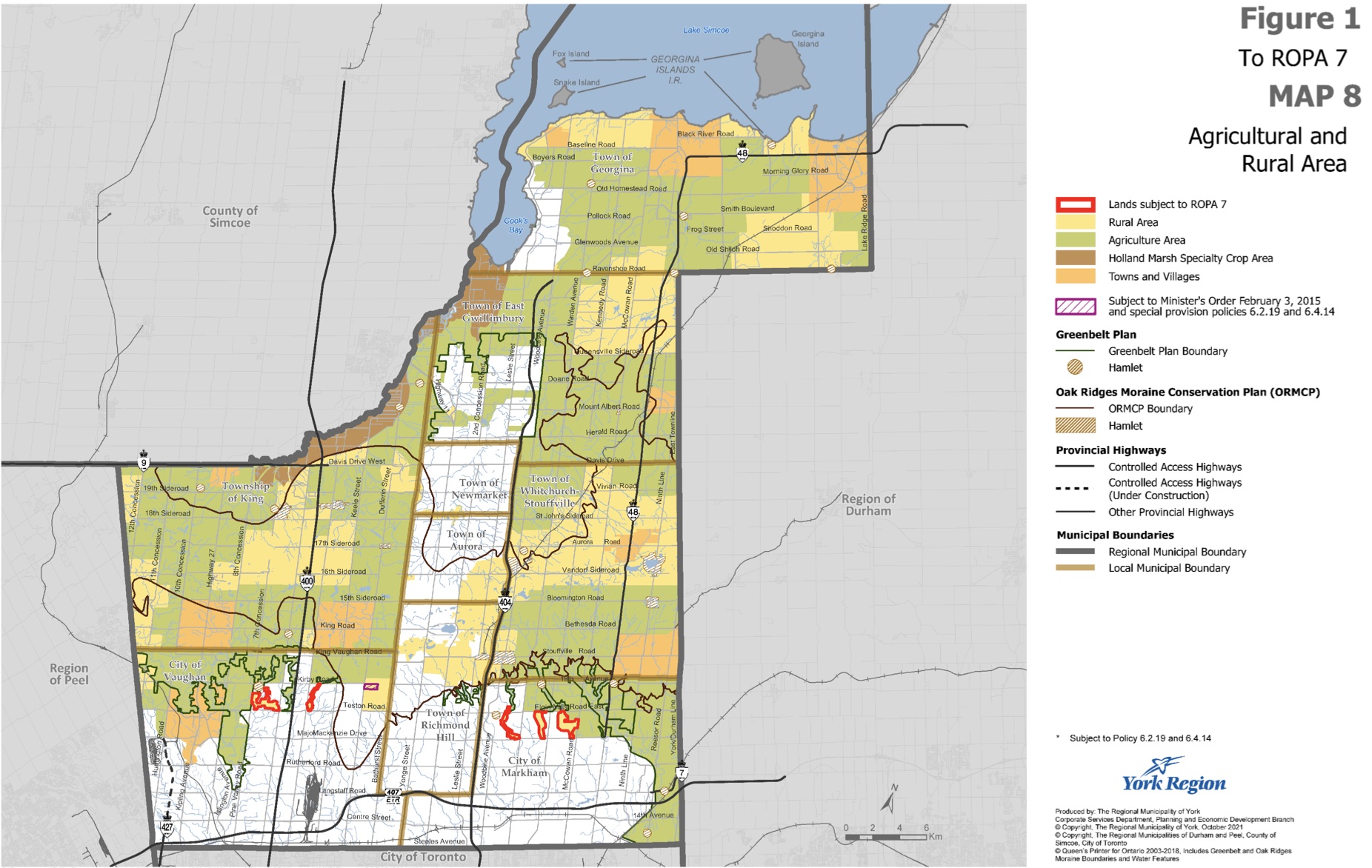
The Greenbelt fingers are shown in red in the map below. And see related map here.
- Details
- Written by: Gordon Prentice
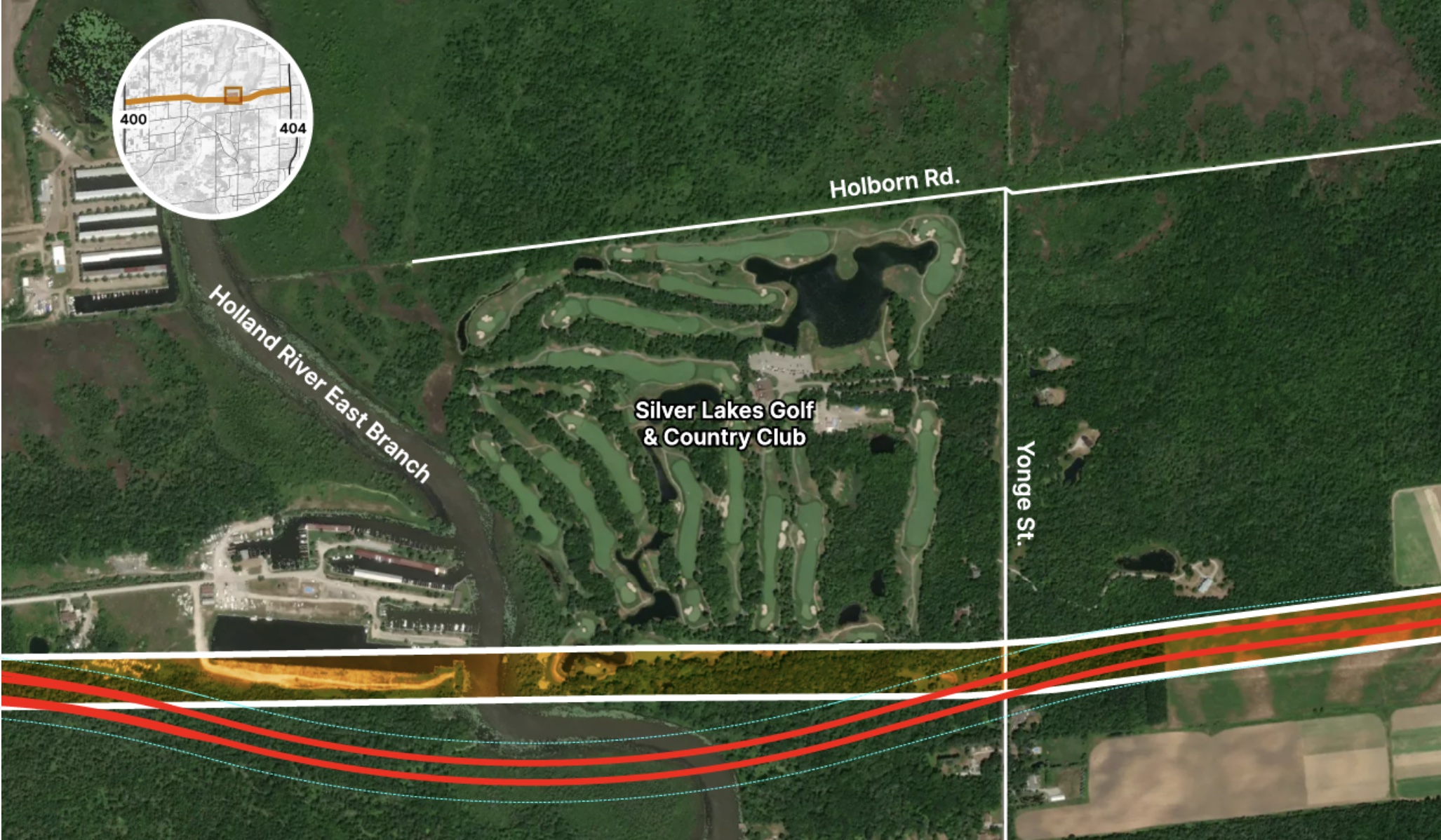
The proposed new route of the controversial Bradford Bypass will leave unscathed a golf course owned by Kenneth Yoo and John Cho, the father of Progressive Conservative MPP Stan Cho, the associate minister of transportation.
The route had previously sliced through the Silver Lakes golf course but now runs to the south.
The by-pass is planned to connect Highways 400 and 404 and has been off-and-on for decades. This report from York Region staff gives the background and history.
"The value will rise beyond imagination"
This morning’s Toronto Star says the new route, announced in April, would lessen the highway’s impact on the Holland River and avoid an archaeological site. There was no mention of the golf course. The Star explains:
“In 2017, a pair of investors bought the Silver Lakes golf course, nestled along a branch of the Holland River in East Gwillimbury.
The buyers were Kenneth Yoo and John Cho, father of Progressive Conservative MPP Stan Cho.
Shortly after the purchase, they were quoted in a Korean daily newspaper calling the golf course a “future-looking investment.”
“It is currently tied to a Greenbelt, but it can be transformed into a residential area. In that case, the value will rise beyond imagination,” Yoo is quoted as saying in Korean. The golf course declined to comment for this story.”
What is the true cost of the bypass?
The Star reports that Transportation Minister, Caroline Mulroney, has put the cost of the 16.2km bypass at about $800M. The Toronto Region Board of Trade says it could cost $1.5B. According to these estimates, the highway could cost between $43M and $92M per kilometre.
Although Metrolinx says it wants to extend the all-day two-way 15 minute GO Train service north from Aurora to Bradford there remain major uncertainties concerning the required road-rail grade separations and how these might be financed.
Update on 4 November 2021: From the Toronto Star: Probe sought over Bradford Bypass decisions
Update on 8 November 2021: From the Premier's Office: Ontario fully funding the Bradford Bypass. And from Newmarket Today: "A no brainer" Ford announces full funding for the Bradford Bypass
Update on 26 November 2021: Ontario Takes Next Step to Build the Bradford Bypass and from the Toronto Star: Documents show Ford Government chose not to pusue $1B penalty from 407 toll toad operators
Update on 3 February 2022: From the Toronto Star: Integrity Commissioner clears Mulroney