Gordon Prentice at Large - Politics in Newmarket




- Details
- Written by: Gordon Prentice

Newmarket-Aurora's newly re-elected Progressive Conservative MPP, Dawn Gallagher Murphy, spent $454,784 on Office and Support Staff expenses in 2024-25 – just shy of the $460,050 “global budget” she had been allocated by the Legislative Assembly.
In her first year as MPP in 2022-23, Gallagher Murphy was 32nd out of 124 MPPs in spending on “office operations”. (Definitions see below).
The BBQs
In that year she spent almost a quarter of her office operations budget hosting her first “free” taxpayer funded BBQ. By contrast, she spent 8.3% of her Office Operations Budget on her 2024 BBQ.
In total, in her first term she spent $26,995 of taxpayers’ money on her free BBQs.
In 2023-24, Gallagher Murphy moved up to 14th out of 124 for spending on office operations before dropping back down to 36th in 2024-25.
Bread and circuses
MPPs need taxpayers’ money to do the job and I have no quarrel with members who staff their office at a level which ensures constituents can get a half decent service and don’t have to wait months for an appointment. Personally, I think it is a scandalous misuse of public money to spend precious tax dollars on “free” BBQs. But I am in the minority in holding this view. Bread and circuses have a long history in politics.
FordNation 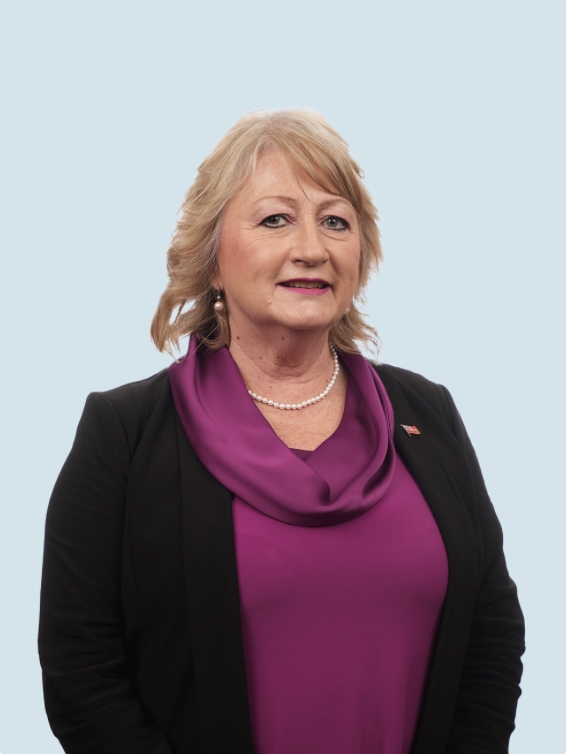
Since June 2022 Gallagher Murphy has become a well-known face about town as she relentlessly promotes herself and her FordNation persona. At Queen’s Park she is one of the highest spenders on “communications’.
Gallagher Murphy spent $41,476 on communications in 2024-25 (25th out of 124 MPPs); $52,395 in 2023-24 (9th) and $42,115 in 2022-23 (11th)
Big hike in staff spending
Throughout her first term in office Gallagher Murphy had many problems with her staff, many of whom accused her of being an office tyrant. Just before the last Provincial election she settled a dispute with her former Office Manager, Teena Bogner, using a Non-Disclosure Agreement which effectively silenced Bogner.
In 2024-25 Gallagher Murphy's spending on support staff increased by almost one third over 2023-24.
Bogner had accused the erratic Gallagher Murphy of presiding over a toxic workplace.
Professional Decorum
In her statement of facts to the Ontario Labour Relations Board Bogner said she started work for the MPP on 9 April 2024:
"I promptly addressed administrative tasks that had been neglected for several months, mentored staff and worked to improve professional decorum and morale within the office which has experienced significant staffing changes."
Over the next four years, we shall see if the tempestuous Gallagher Murphy can learn how to run a happy ship.
Note 1: (Definitions from the Speaker’s Report on Members’ Expenditures June 2023)
- Support Staff: Sums include salaries paid to Queen’s Park and Constituency Office staff, includes funding for Members’ staff who were away on extended sick leaves.
- Constituency Office Rent: includes expenses such as rent, utilities and janitorial services.
- Office Operations: includes expenditures for urban travel, office supplies, advertising, staff travel, professional services etc
- Communications: includes postage, mail preparation and distribution, printing, typesetting, artwork and photography for newsletters, flyers and target mailings
Note 2: The Provincial election was on 2 June 2022. Figures for newly elected MPPs such as Gallagher Murphy cover a ten-month period rather than the standard 12 months. The allocated Global Budget reflects this.
Note 3: The Toronto Accommodation Overage Allowance includes the "Toronto accommodation budget overages up to 5% of the base global budget". Whatever that means.
Update on 29 August 2025: From Newmarket Today: Gallagher Murphy outspends ex-MPP Chris Ballard in Provincial Election 2025.
- Details
- Written by: Gordon Prentice
Just thinking
Newmarket has been thinking about licensing Boarding or Lodging Houses for years but has never quite got round to doing anything about it. (Graphic right: Minutes of Committee of the Whole meeting on 3 May 2011). 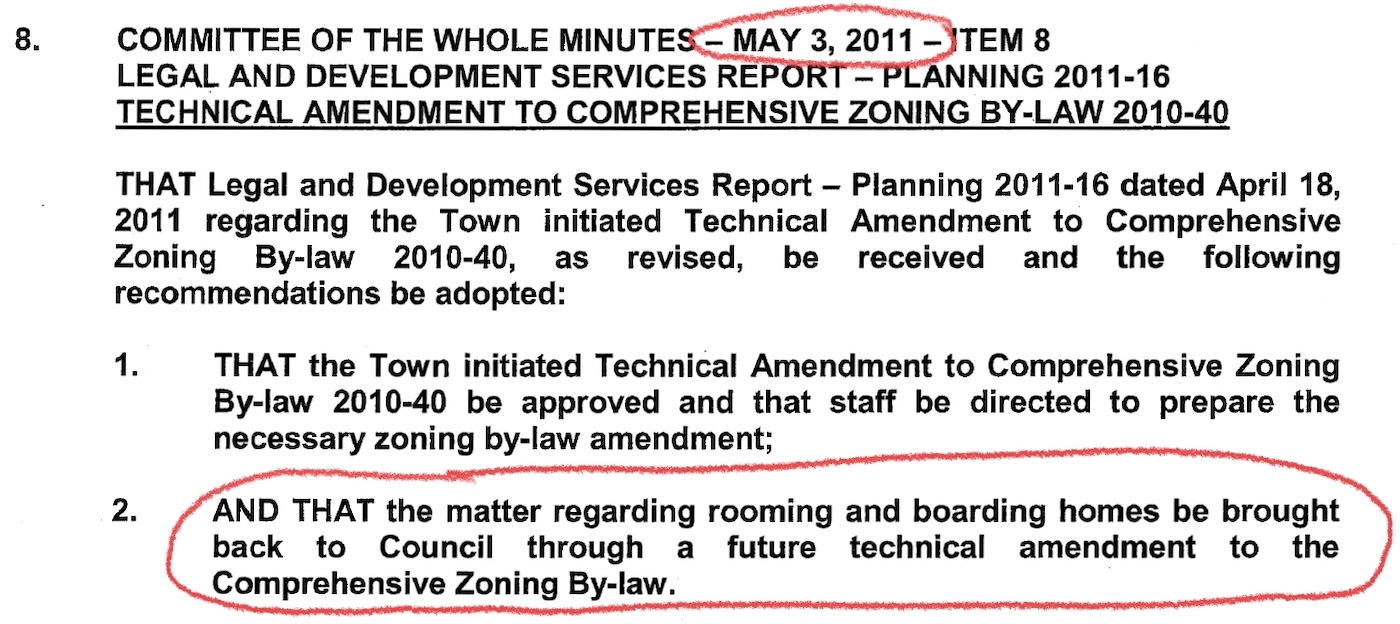
Many of our near neighbours such as Barrie have been licensing boarding houses for ages.
Barrie licences Boarding, Lodging and Rooming Houses (BLR) to make sure they are safe:
“Building Code requirements respecting fire and life safety for BLR houses are much more stringent than the requirements for single detached dwellings. Upgrading a single detached dwelling to a BLR house requires significant construction and has significant costs associated with that construction.”
Statistics Canada defines lodging and rooming houses this way:
“This category includes commercial establishments (which may originally have been a private dwelling) that have furnished rooms for rent. Residents receive no type of care. They generally have access to common facilities such as the kitchen and/or bathroom. Generally, the clientele are transitioning between housing tenures or locations, and have no other place of residence.”
I have no idea how many boarding houses there are in Newmarket but the 2021 census tells us 2,470 people in Newmarket were living only with non-relatives – which excludes Common Law relationships. So maybe that gives us a clue. I don't know.
In any event, it is as plain as a pikestaff there are boarding houses out there, totally unregulated by the municipality.
Zoning for People 
Newmarket’s Mayor, John Taylor, says the municipality doesn’t zone for people – they zone for uses. Quite right too.
That said, a boarding house is a use classification in its own right which should be licensed and regulated.
Paradoxically, the Town does license “Additional Residential Units” using the same health and safety arguments that come into play with boarding houses. These ARU's are often converted basements with kitchen, living space and bathroom and, crucially, a separate entrance.
“But if you rent a room in a house or a flat with a shared entrance, kitchen and/ or bathroom facilities, the ARU By-law does not apply to you.”
So it is quite possible for five, six, seven or more unrelated people to live in a boarding house using a shared front door and other facilities and stay under the radar, invisible to the municipality.
Regulated boarding houses – almost by definition – don’t cause problems. But the unregulated ones can cause major headaches in neighbourhoods. Garbage is just one but there are loads of others. I could write a book about it.
The Town also regulates short-term rentals but only if the owner doesn't live on the premises.
If the owner has more than one property the Town must determine which is his or her "primary residence".
Rents going through the roof
Later this year the Town will be completing its Official Plan Review and I cannot believe it will say nothing about Boarding Houses.
As everyone knows, rental housing in Newmarket is scarce and expensive with people taking what's on offer at a rent they can afford. Rents are way out of reach for increasing numbers of people.
The Toronto Regional Real Estate Board tells us that in Newmarket in the fourth quarter of 2024 there were, in total, three 1 bedroom apartments rented out at an average rent of $2,267 and three 2 bedroom apartments at an average rent of $2,733. In addition, 29 townhouses were rented out at an average rent of $2,217 (1 bed); $2,655 (2 beds) and $3,045 (3 beds). These are eye-watering sums of money for many Newmarket people.
Out of sight. Out of mind
For its part, York Region has a boarding house by-law but, astonishingly, does not license boarding or lodging houses other than those it helps finance.
The Town's Mayor, John Taylor, who has been living and breathing housing policy for decades, knows the extent of the problem. In fact, he has just been elected to Chair York Region's Housing and Homelessness Committee.
So maybe he can tell us why boarding houses here in Town are not licensed.
Clip from a discussion on housing matters as part of the Official Plan Review on 18 September 2023. Boarding houses are fleetingly mentioned.
Update on 20 May 2025: I use "boarding houses" here as a catch-all term. Definitions vary. Boarding houses may offer meals. Lodging houses don't.
- Details
- Written by: Gordon Prentice
In 2021 the Glernway West developer, Marianneville, made a charitable donation of 16 acres of land to the Town of Newmarket. In return, the Town gave the developer a tax receipt (or tax certificate) which could be used to offset tax otherwise owing to the Canada Revenue Agency.
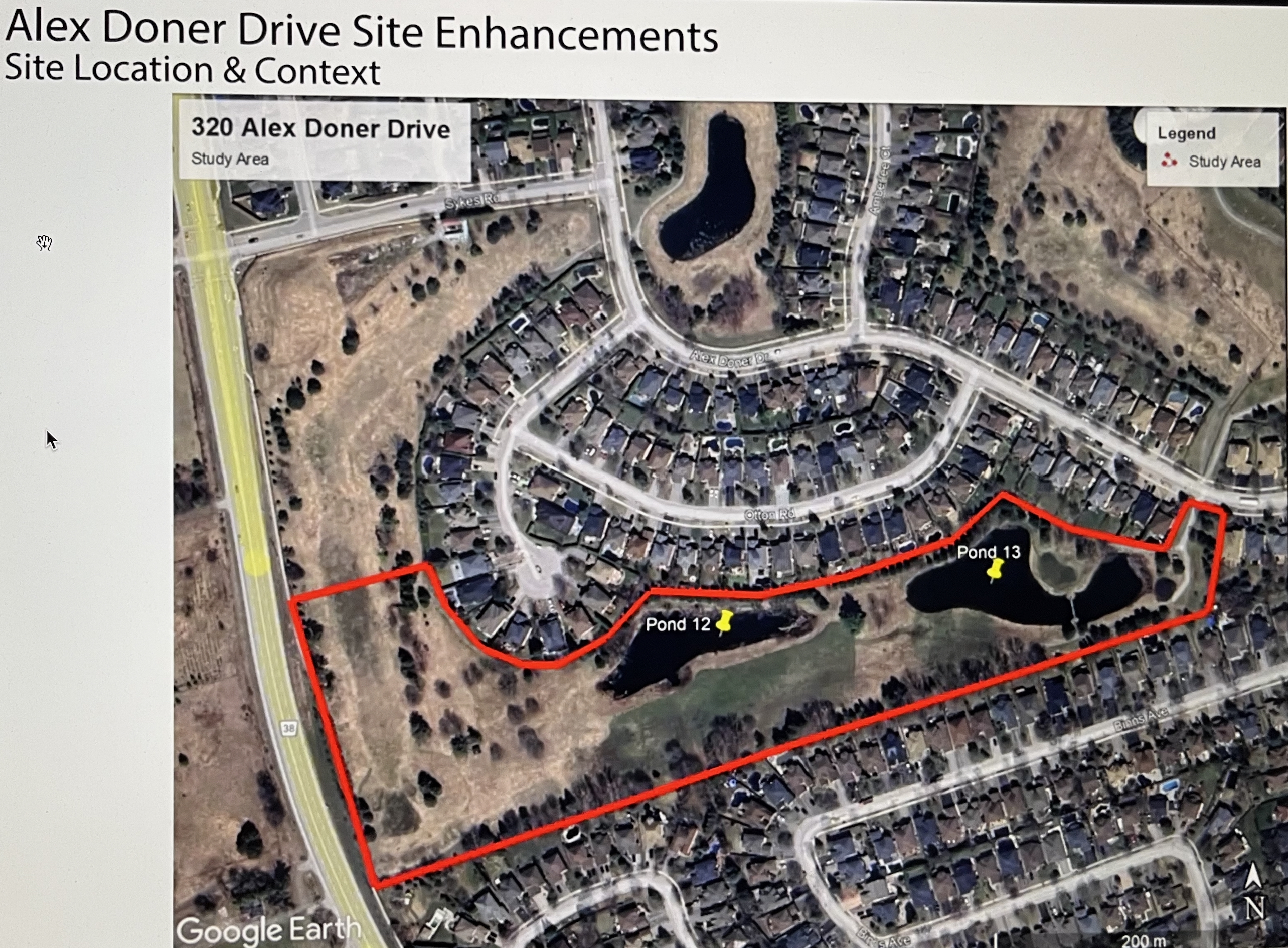
The valuation by Bottero & Associates made the "extraordinary assumption" that the two stormwater ponds on the donated land could be filled in and the land used for a town house development. I cannot believe this assumption was ever presented to the Town's engineers or planners for their comments. They would have immediately raised objections.
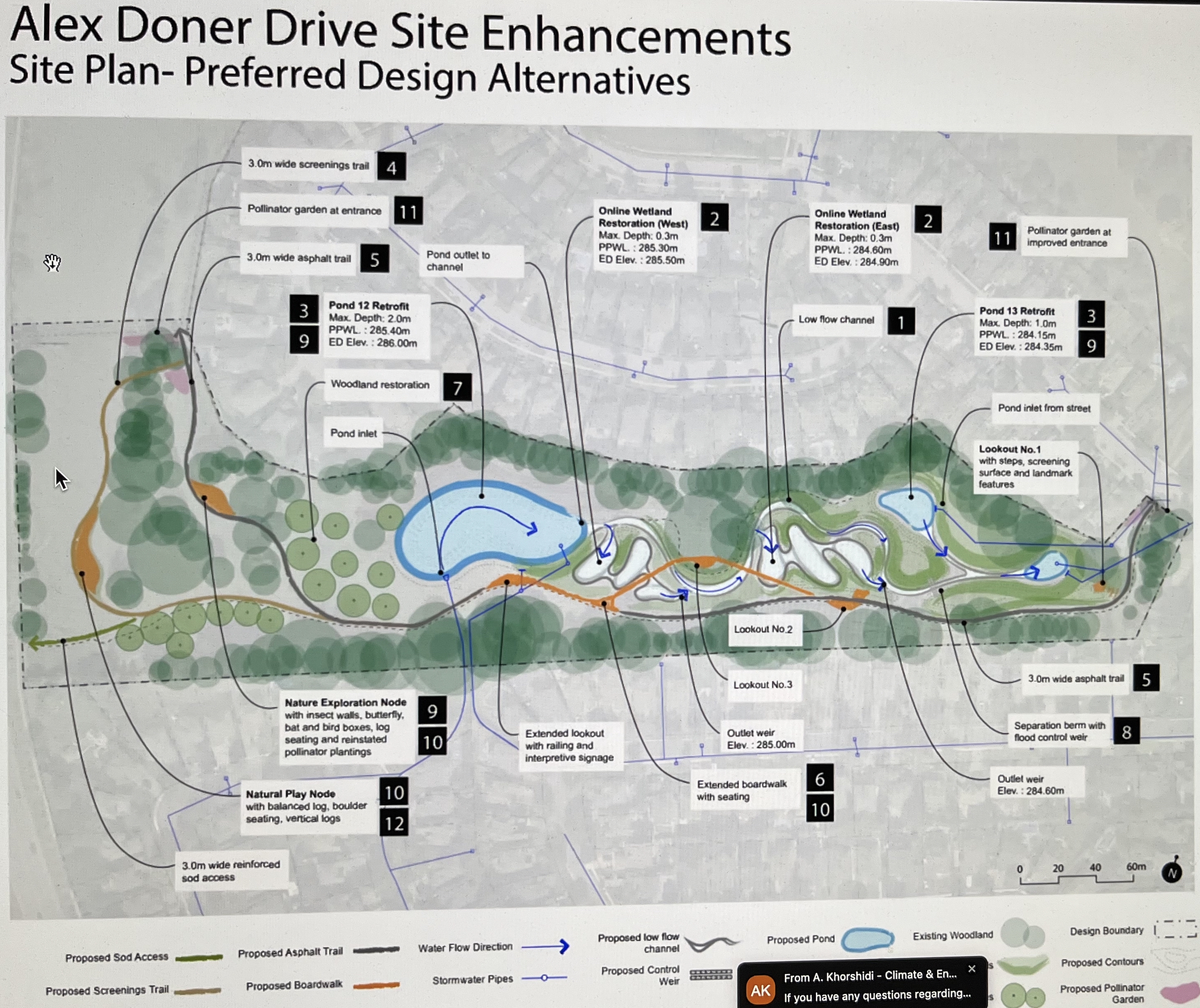
The Town of Newmarket's Comprehensive Stormwater Management Master Plan (2017) gives figures for the original design protection levels for the two storm water ponds on the donated land together with the catchment area and pond storage capacities. The ponds are being reconfigured and I do not immediately know the capacity of the new ponds and how they will compare with the old ones. But the plain fact is they are staying and not being filled in. They have a continuing practical function, going beyond the aesthetic of having a nice water feature on your doorstep.
"Definitely required"
Last night (6 May 2025) the Town consulted residents on its early thinking on how the donated land could be enhanced and turned into an attractive open space, designed to benefit the neighbourhood and the local environment. Residents who tuned into the Zoom presentation were told the storm water ponds were "definitely required" to prevent flooding downstream.
The cost of this project will, I suppose, fall on Town residents and on the Lake Simcoe Region Conservation Authority. We wait for further details. Years ago, as part of the original deal, the wily developer, Marianneville, offered to pay for the trails provided signs were posted at intervals along the paths reminding the public of the developer's generosity.
Clearly, we need to revisit the Bottero valuation. If its central premise - filling in the storm water ponds and using the land for a town house development - is invalid then we should say so.
It was inaccurate in 2021 and it is proved to be inaccurate today.
Update on 7 May 2025: The YouTube clip was shot on 25 April 2025 and sets out the position on that date as I understood it to be. The information from the Zoom meeting on 6 May 2025 has moved things on.
Update on 9 May 2025: This morning I received this from the Town’s engineers concerning the storm water ponds:
"The two ponds provide stormwater storage and some quality treatment for the neighbouring subdivision. Filling in these ponds would increase damage and the risk of floods downstream during storms and snow melts events by removing upstream stormwater storage capacity.”